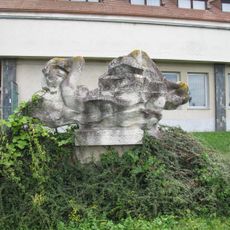
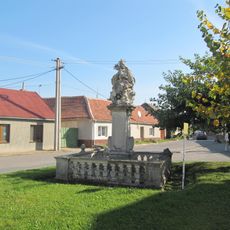
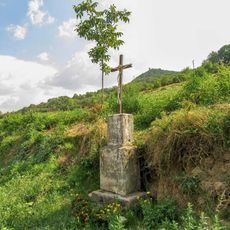
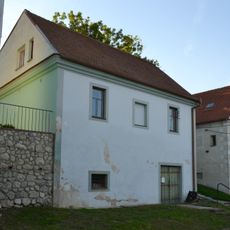
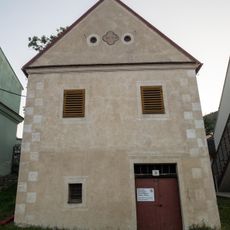
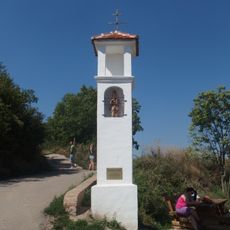
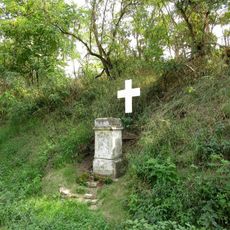
Triple burial of Dolní Věstonice, Paleolithic burial site in Dolní Věstonice, Czech Republic
The Triple Burial of Dolni Vestonice holds three Paleolithic male skeletons arranged in a specific way: one faces toward another, while the third lies flat on his stomach. The remains are covered with red ochre and surrounded by charred spruce logs.
The grave was found on 13 August 1986 by archaeologist Bohuslav Klíma during rescue excavations at Dolní Věstonice II, ahead of dam construction on the Thaya. Charcoal from a burnt layer of spruce branches and trunks gave radiocarbon ages between roughly 27,290 and 30,246 BC, so the burial is about 30,000 years old, not 26,000.
The burial shows signs of ritual practices that early people performed for their dead. Red ochre on the skulls and ornaments made from pierced animal teeth and ivory suggest this was a careful, meaningful act rather than a simple grave.
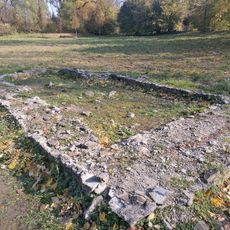
The skeletons were lifted in 1986 and are not on display at the findspot, a slope below the former campsite of Dolní Věstonice II near the Thaya dam. The site lies in the Pollau Hills above the village, where excavations have continued since 1924; the recovered material is held in museum collections.
One of the three men shows evidence of deadly violence, with a wooden pole found driven through his hip bone. This discovery stands as one of the oldest known records of fatal conflict between people.
The community of curious travelers
AroundUs brings together thousands of curated places, local tips, and hidden gems, enriched daily by 92,374 contributors worldwide.