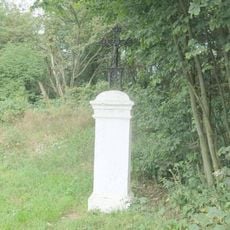
Mining cultural landscape Krupka, Mining cultural landscape in Krupka, Czech Republic
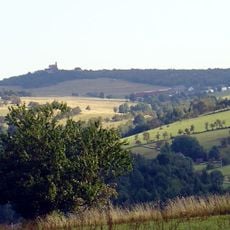
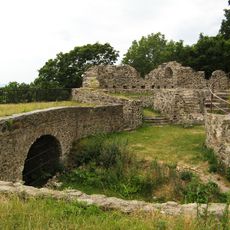
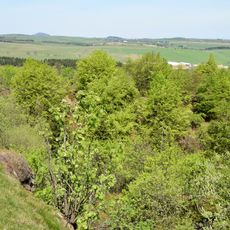
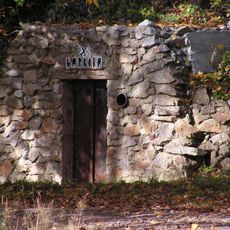
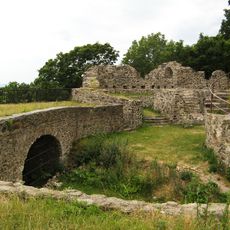
The Mining Cultural Landscape Krupka covers 790 hectares in the eastern Krušné hory, from 284 m at the Děčín–Oldřichov railway to 807 m at Komáří hůrka. Its protected area contains old mine workings—adits, pinges, sejpy, spoil heaps and subsidence hollows—including the Starý Martin adit with the longest tin vein in Central Europe and the 75 m deep Velká pinka on Komáří hůrka.
Tin was already panned from alluvial deposits in the Krupka area during the Bronze Age, and the ore district itself dates from the 13th century, making it one of the oldest in the Czech lands. From the 19th century, tungsten, molybdenum, bismuth, potassium feldspar and fluorite were mined alongside tin and copper. In 2014 the 790-hectare mining landscape was declared a protected landscape zone, and in 2019 it was inscribed in the UNESCO World Heritage list as part of the Erzgebirge/Krušnohoří Mining Region.
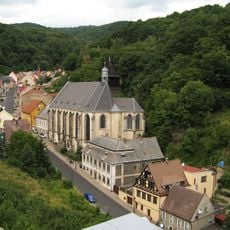
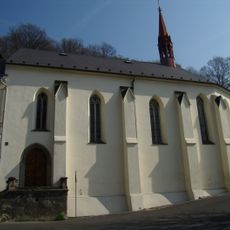
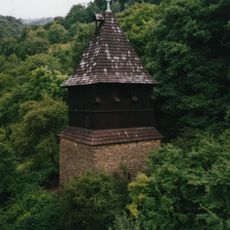
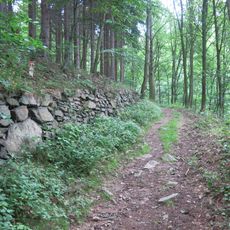
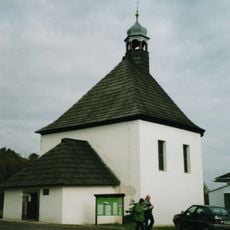
The name Krupka derives from the Old Czech word for a lump of ore, and the town's medieval core still follows the layout of a mining settlement. The Gothic Church of the Assumption of the Virgin Mary, the Hospital Church of the Holy Spirit, and the Renaissance Church of St. Anne were all built with mining wealth. The old mining trail from Krupka to Horní Krupka is still walkable.
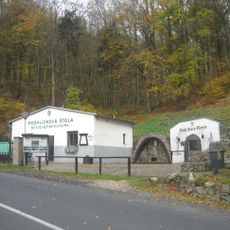
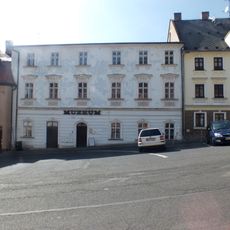
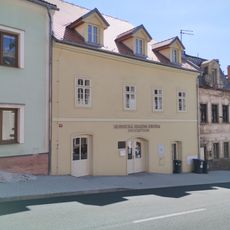
The landscape is best explored on foot, with walking paths connecting major mining sites. A visitor center offers exhibits and information to help understand how mining operations worked here.
The Große Pinge, a massive sinkhole about 140 by 45 meters across and 75 meters deep, shows how profoundly mining changed the land. This enormous depression formed over centuries as miners extracted tin and copper below.
The community of curious travelers
AroundUs brings together thousands of curated places, local tips, and hidden gems, enriched daily by 93,517 contributors worldwide.