Velké Žernoseky, Castle in Czechia
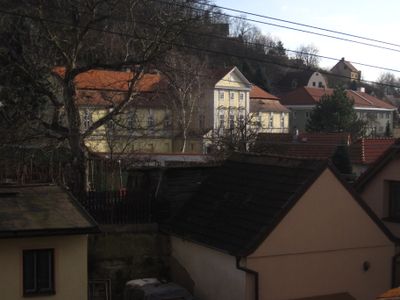
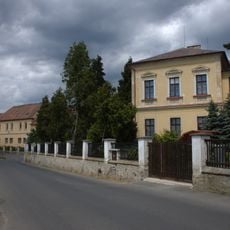
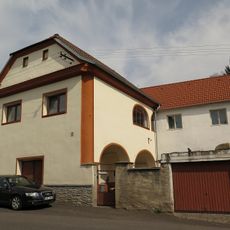
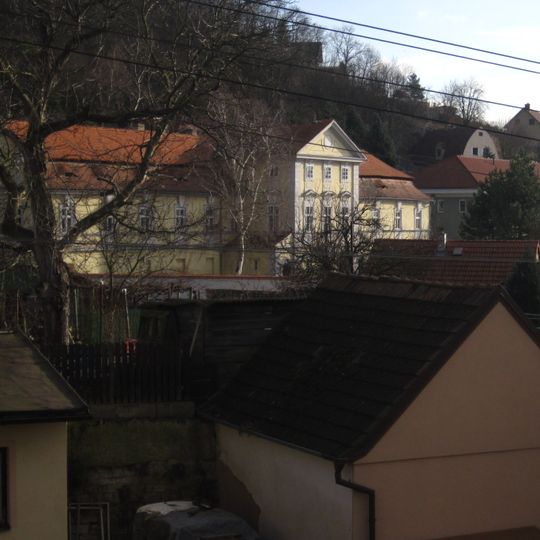
Velké Žernoseky is a Baroque château in the village of Velké Žernoseky, built after 1667 on the site of an older fortress. The one-storey building has a two-storey central risalit, paired corner quoins, sculpted window cornices and stucco work; volute gables close the side wings, while a tympanon tops the central risalit. The entrance portal bears a supraporta with the coat of arms of the Nostitz-Rieneck family.
A fortress was first recorded in 1543, when Vilém Kamýcký had it entered in the land registers; it may have stood on the site of an older Cistercian farmstead. After the Thirty Years' War, Jan Hartvík of Nostitz bought the estate in 1667 and had a simple Baroque château built on the fortress site. His grandson Bedřich Mořic Nostitz-Rieneck probably had it rebuilt in the 18th century.
After 1916 the Prague wine firm J. Oppelt a synovec bought the estate with its vineyards and opened a vinárna, a wine tavern, in the château. From 1919 to 1928 the building housed a Czech minority school. After 1945 the State Wine Cellars managed it, followed by a winegrowing research and breeding station.
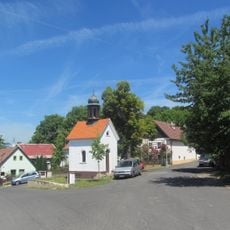
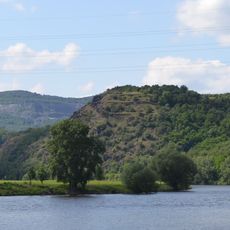
The château stands on the right bank of the Elbe in Velké Žernoseky, in the Litoměřice district. The cellars beneath the former fortress were used by the Swedish army as a prison during the Thirty Years' War. The building is protected as a cultural monument of the Czech Republic and is not described in the sources as regularly open to visitors.
The Nostitz-Rieneck coat of arms is set among acanthus scrollwork above the main portal, reached by a short flight of stairs; many visitors pass it without looking up. From 1919 to 1928 the château housed a Czech minority school, and after 1945 it was managed by the state wine cellars and later a vine research and breeding station.
The community of curious travelers
AroundUs brings together thousands of curated places, local tips, and hidden gems, enriched daily by 94,015 contributors worldwide.