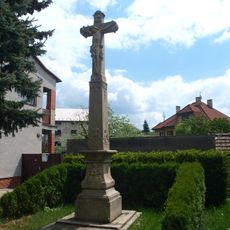
Cemetery chapel in Štípa, Cemetery chapel in Štípa, Czech Republic
The cemetery chapel in Štípa is a stone structure built within the graveyard as a space for memorial rites and quiet prayer. Inside, the simple layout features a central altar and room for small gatherings of visitors paying respects.
The first written mention of Štípa, in 1391, concerns this church, when Ješek of Šternberk endowed it. The Šternberks enlarged the chapel into a Gothic church at the end of the 14th century; its entrance portal survives. In 1762 the new pilgrimage Church of the Nativity of the Virgin Mary was completed, and Joseph II abolished the old church, which then served as a storehouse and from 1807 to 1907 as the Seilern family tomb.
The chapel owes its origin to the Štípa Madonna, a small Marian statue said to have vanished from the Kosteletz chapel and been found in the Štípa grove; a chapel was built here in her honour. The statue, considered one of the oldest in Moravia, was moved to the new Church of the Nativity of the Virgin Mary in 1762. Graves of the Šternberk family and the lords of Minkvicburk and Nekešov remain in the crypt.
The chapel stands at the crossroads in the centre of Štípa, right beside the Church of the Nativity of the Virgin Mary, surrounded by the space of the former cemetery. A low stone wall about 5 m long with a small gate between two pillars is part of the grounds. The massive carved two-leaf door dates from 2016.
The chapel's early Gothic portal, about 3 m high and just under 2 m wide, survives from the 14th-century rebuilding by the Šternberk family; its mouldings alternate rolls and hollows, and the massive carved two-leaf door was fitted in 2016. Above it, a weathered Latin inscription reads AD MAIOREM DEI GLORIAM ET BEATAE MARIAE VIRGINIS.
The community of curious travelers
AroundUs brings together thousands of curated places, local tips, and hidden gems, enriched daily by 94,136 contributors worldwide.