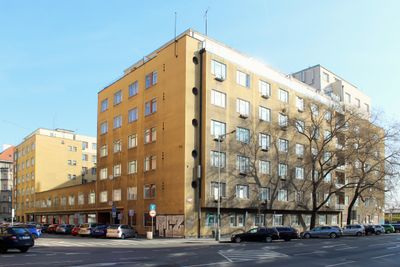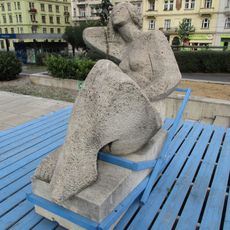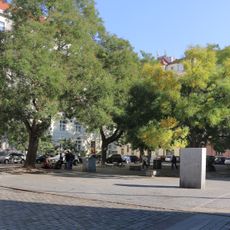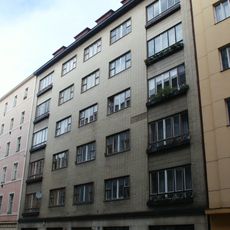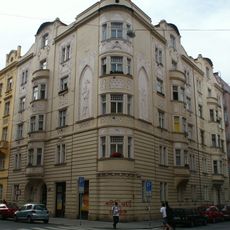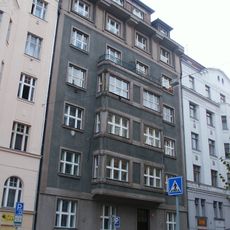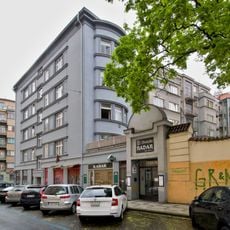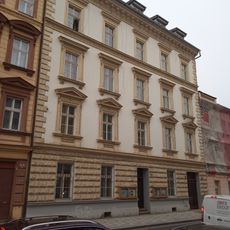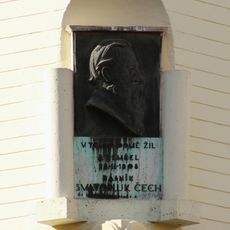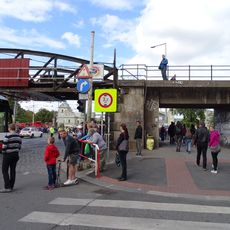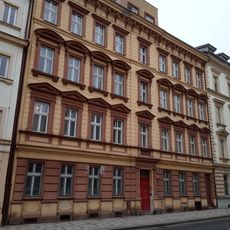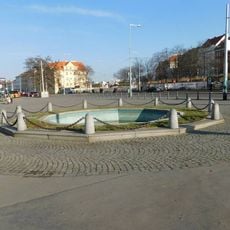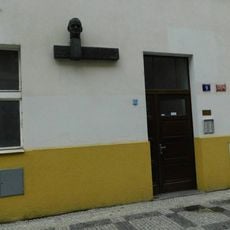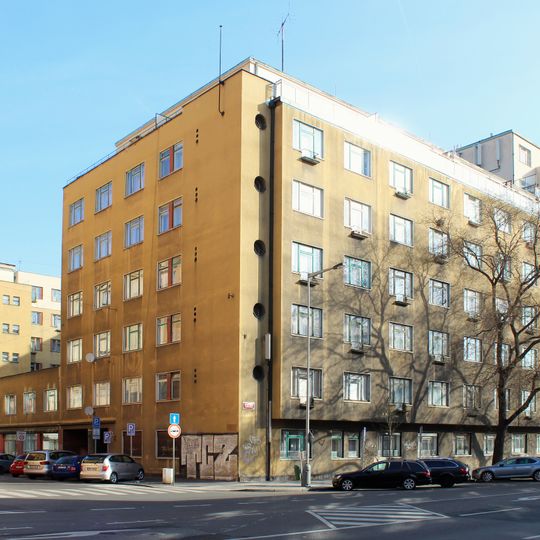
Malý Berlín, Constructivist residence in Holešovice, Prague 7, Czech Republic.
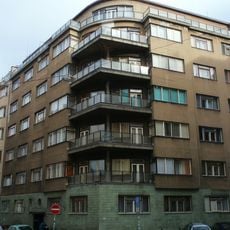
Malý Berlín is a six to eight-story apartment building with brown-yellow plaster and green-white window frames that follows strict geometric lines. The structure surrounds a central courtyard with benches and garden areas where residents can gather.
Construction of the block was financed by the Building Cooperative of Bank and Savings Bank Officials in Prague and began in 1937. The building was officially approved on 15 March 1939, the day German troops occupied Czechoslovakia. Under the Protectorate the cooperative was placed under forced administration by the Prague Gestapo, and the new flats housed incoming members of the Reich administration. During the Prague Uprising of 5–6 May 1945, insurgents seized the building.
The nickname Malý Berlín refers to the German-speaking community concentrated in the surrounding streets in the 1930s, not to the building itself. The house's brown facade earned it the nickname Braunes Haus. After the protectorate was declared, the cooperative came under forced administration by the Prague Gestapo, and the new flats housed incoming Reich officials.
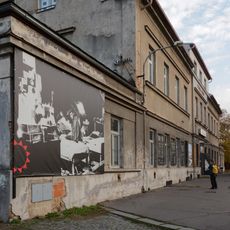
Malý Berlín stands on U Smaltovny street in Prague 7–Holešovice, not at Bubenská and Veletržní. The block is entered from its central courtyard, into which the individual wings open; the street facades are plain, with green window frames and bands of exposed brick around the windows. The courtyard originally held a small fountain, a sandpit and a pergola with benches.
The architect was Franz Hruschka, reportedly with Adolf Foehr, whose name does not appear in the building documentation. The brown facade earned it the nickname Braunes Haus, and the street-facing walls are plain, with green window frames and bands of exposed brick around the windows.
The community of curious travelers
AroundUs brings together thousands of curated places, local tips, and hidden gems, enriched daily by 93,995 contributors worldwide.