Biltmore Industries, Inc., Historic craft and textile workshop complex in Asheville, United States
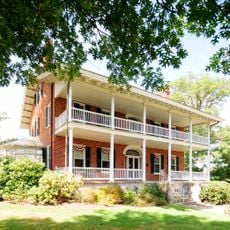
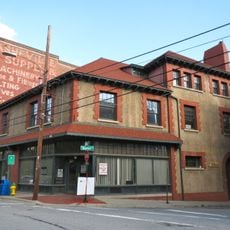
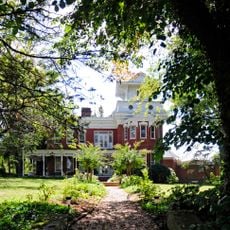
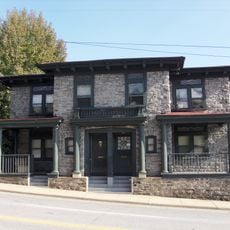
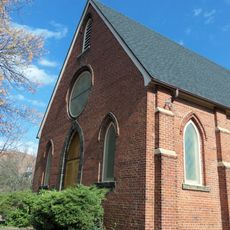
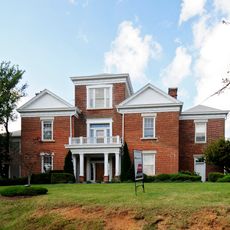
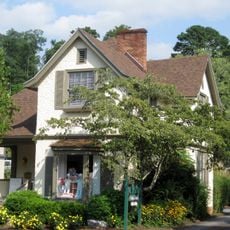
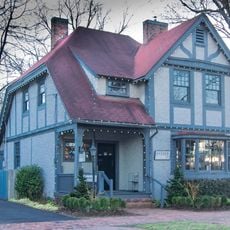
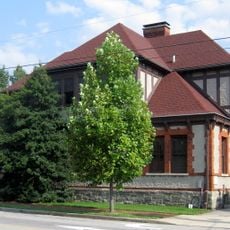
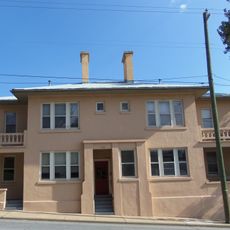
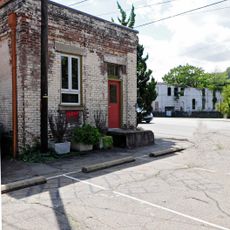
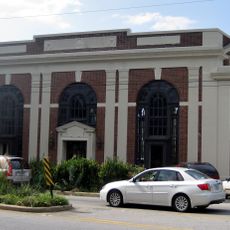
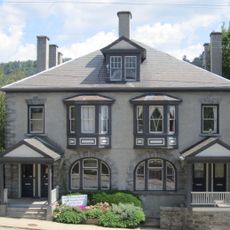
Biltmore Industries, now Grovewood Village, is a group of seven buildings erected around 1917 beside the Omni Grove Park Inn in Asheville. They are built of hollow ceramic tile with stuccoed exterior walls. The former Weavers' Building, dating to 1923, holds an antique car museum; the complex also contains the Eleanor Vance and Charlotte Yale buildings, a carding and spinning building, a boiler house, a gatehouse and a guardhouse.
Eleanor Vance and Charlotte Yale came to Asheville in 1901; the Girls' and Boys' Clubs formed Biltmore Estate Industries in 1905, selling chairs, frames, boxes and baskets made by children for pay. Fred Seely bought the company from Edith Vanderbilt in 1917, renamed it Biltmore Industries and built the seven tile-and-stucco buildings. Harry Blomberg bought the complex in 1953 and turned the weavers' building into an antique car museum.
Each visitor to the weaving operation was given a sample of the cloth, and Fred Seely claimed Helen Keller wore fabric from the looms after receiving a piece during a visit. Homespun cloth was still made here into the 1970s, and a museum of the homespun industry keeps that production history on view.
The site is located near Grove Park Inn and easily reached on foot when visiting the museum spaces. The former production buildings are partially accessible to visitors, though interior access may be limited depending on current operations.
The buildings were constructed using hollow ceramic tile, an innovative building method of that era that combined lightweight construction with durability. This technique was advanced for its time and remains a notable feature of the complex today.
The community of curious travelers
AroundUs brings together thousands of curated places, local tips, and hidden gems, enriched daily by 92,892 contributors worldwide.