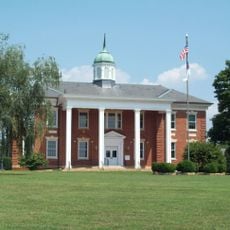
Maier Museum of Art at Randolph College, University art museum in Lynchburg, United States.
The Maier Museum of Art at Randolph College holds several thousand American paintings, prints, drawings and photographs from the 19th to the 21st centuries. The collection began in 1907, when the graduating class commissioned William Merritt Chase to paint a portrait of college founder William Waugh Smith. Since 1911 the college has bought at least one work from each annual contemporary art exhibition, adding pieces by Winslow Homer, Georgia O'Keeffe, Edward Hopper and Faith Ringgold.
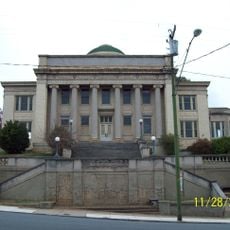
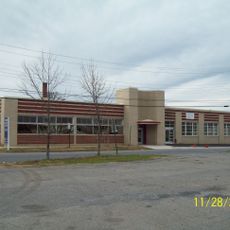
In 1951 the National Gallery of Art built a secret emergency repository, code-named Project Y, on the Randolph-Macon Woman's College campus, at the end of Quinlan Street. The reinforced concrete structure, financed by the A. W. Mellon Educational and Charitable Trust, was finished in spring 1952 for under $250,000 and called simply "the art gallery." Renovations in the mid-1970s, funded by the National Endowment for the Arts, and again in 1981-82 preceded the 1983 endowment from the Sarah and Pauline Maier Scholarship Foundation that gave the museum its name.
The collection began in 1907 when the graduating class commissioned William Merritt Chase to paint a portrait of William Waugh Smith, the college's first president. Since 1911 the college has bought at least one work from each annual contemporary art exhibition started by Louise Jordan Smith, its first art professor. Works by Winslow Homer, Mary Cassatt, Georgia O'Keeffe, Edward Hopper, Faith Ringgold and Betye Saar entered the collection this way.
The museum sits at the end of Quinlan Street on the Randolph College campus, in the building finished in spring 1952 for the National Gallery of Art's emergency repository. The college renovated the space in the mid-1970s with National Endowment for the Arts funding, and again in 1981-82. Visitors reach the galleries from the campus side; the reinforced concrete structure has no separate museum entrance from the street.
The reinforced concrete building at the end of Quinlan Street was finished in spring 1952 for under $250,000, paid for by the A. W. Mellon Educational and Charitable Trust. A pre-staged convoy of trucks waited in the National Gallery's garage, and a three-bedroom cottage housed the curator who would travel with the works.
The community of curious travelers
AroundUs brings together thousands of curated places, local tips, and hidden gems, enriched daily by 92,633 contributors worldwide.