Jugtown Historic District, Historic district in Princeton, United States
Jugtown Historic District is a cluster of historic buildings around the intersection of Harrison Street and Nassau Street in Princeton, New Jersey. The earliest surviving structure, at 342 Nassau Street, has a basement beam inscribed 1730. The district includes the Joseph Horner House at 344 Nassau Street, built around the 1760s, and the two-story house at 341 Nassau Street from the same period.
Jugtown was first settled by Europeans around 1730 at a crossroads on the King's Highway, now Nassau and Harrison Streets; a beam in the basement of 342 Nassau Street is inscribed 1730. John Morton, a potter from Wrightstown, Pennsylvania, bought a lot and opened the village's first pottery in 1766. Trade on the Delaware and Raritan Canal brought prosperity in the 1830s, and ceramics competition from Trenton closed many potteries around mid-century.
This area was known for pottery production that drew on local clay sources found nearby. The craft gave the neighborhood its character and connected it to the broader economy of the region.
The area is best explored on foot since the buildings cluster around the street intersection. Taking time to walk slowly helps you notice the architectural details throughout the neighborhood.
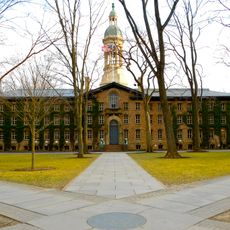
The clay pits here supplied material not just for local potters but also for Nassau Hall, one of the university's oldest buildings. This link shows how closely the small community was woven into the nearby university's story.
The community of curious travelers
AroundUs brings together thousands of curated places, local tips, and hidden gems, enriched daily by 93,597 contributors worldwide.