Battle Point Site, archaeological site in Crockery Township, Michigan, USA
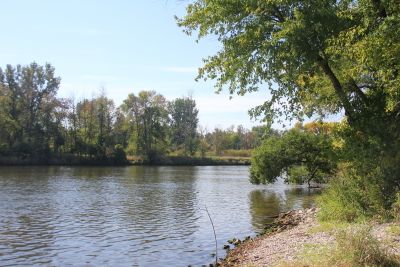
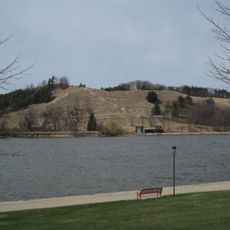
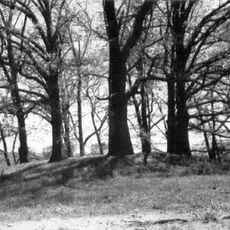
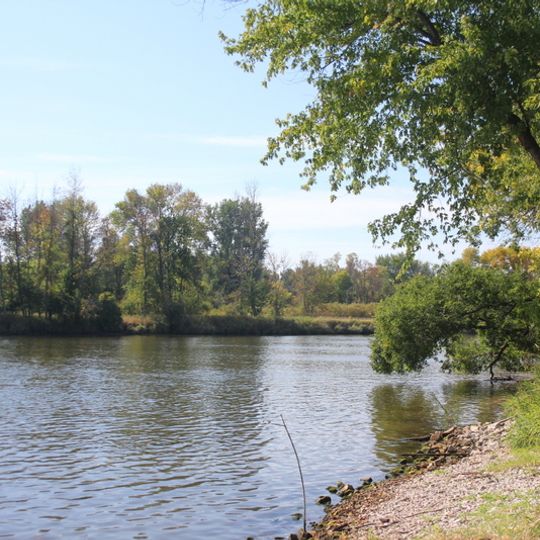
Battle Point Site, designated 20OT50, is an archaeological site on Battle Point along the Grand River in Crockery Township, Ottawa County, Michigan. It was the location of Fort Village, an Odawa settlement and burial ground used for about 20 years between 1815 and 1835 under Chief Onamontapay. Excavations in the 1950s and 1971–2 uncovered graves containing trade goods such as knives, firesteels, gunflints, axes, kettles, silver brooches and bracelets, clay pipes, and glass beads.
The village formed around 1815 under Chief Onamontapay and was abandoned in 1836 following a treaty that transferred land north of the Grand River to the United States. After removal, Chief Shiawassee of the Potawatomi attempted to organize resistance at the site but was peacefully prevented by community leaders, leading the Odawa to eventually leave the region.
The Odawa called the site Fort Village, and it was used for about twenty years between 1815 and 1835 under Chief Onamontapay. In 1836 Chief Shiawassee of the Potawatomi convened a council here, urging the Odawa and other local groups to rise against European settlers; the Rev. William Ferry and his Indian friends defused the plan. Some Odawa families stayed in the area, and a Native American school opened on Battle Point in 1855.
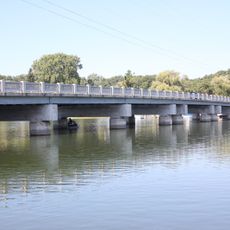
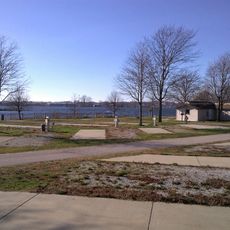
The site lies on the Grand River in Crockery Township, Ottawa County, Michigan, and is listed on the National Register of Historic Places under reference number 20OT50. It is an archaeological site with no visitor facilities, and the burials were exposed by river erosion in the 1950s. Access is not maintained for the public, so the location is best treated as a research site rather than a destination.
The graves went hidden for decades until river erosion exposed them in the 1950s, prompting archaeologists to excavate the site in the 1970s. This accidental discovery through natural forces brought the Odawa burial legacy back to public attention.
The community of curious travelers
AroundUs brings together thousands of curated places, local tips, and hidden gems, enriched daily by 92,661 contributors worldwide.