Wadi-us-Salaam, Islamic cemetery in Al-Najaf District, Iraq
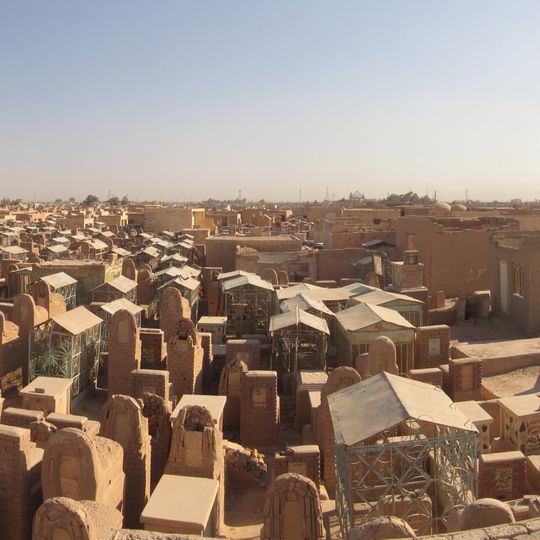
Wadi-us-Salaam is a burial ground adjacent to the shrine of Ali ibn Abi Talib in Najaf, containing millions of graves spread across vast terrain. The site features countless gravestones arranged closely together, with pathways connecting different sections for movement and access.
The burial ground originated over 1,400 years ago as a place to honor the first imam of Shia Islam. Over centuries, it grew into the world's largest cemetery, drawing believers from across the Islamic world.
Shia funeral rites here include washing and wrapping the body at the cemetery, funeral prayers at Ali's shrine, carrying the wrapped corpse around the shrine as in tawaf, then reciting Qur'anic verses at the grave. The name Wadi-us-Salaam combines wadi, a valley crossed by floods, with salaam, safety from harm.
The cemetery covers about 601 hectares north of Ali's shrine, so plan on walking long distances between sections. Modern burials are placed in shared crypts managed by the Marja', and graves are dug daily, so keep to paths and avoid photographing mourners. Dress modestly.
Few visitors know that ground administrators actively assist families in planning grave locations, as placement follows strict religious guidelines. This hidden service helps maintain order across the vast terrain while honoring burial traditions.
The community of curious travelers
AroundUs brings together thousands of curated places, local tips, and hidden gems, enriched daily by 94,670 contributors worldwide.