Dhuvjan Monastery, Byzantine monastery in Dhuvjan, Albania
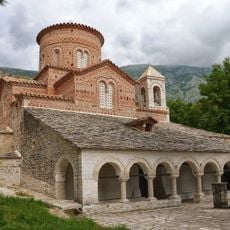
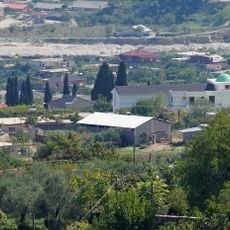
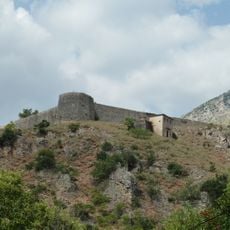
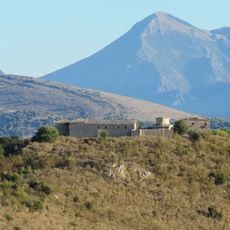
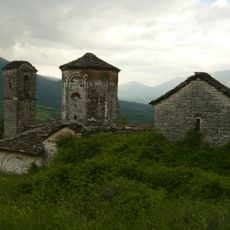
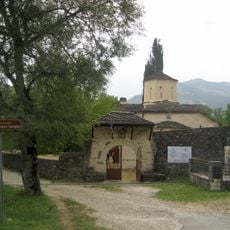
Dhuvjan Monastery is a Byzantine religious building in southern Albania, situated between the cities of Gjirokaster and Delvine. It displays traditional Byzantine features including domes and decorative frescoes that distinguish the structure within the surrounding landscape.
The monastery was founded in 1089 and originally served as an educational center for the local population. In the 18th century, Cosmas of Aetolia established a Greek school at the site, followed by additional educational facilities in the 19th century that reinforced its role as an intellectual hub.
The monastery is also known as the Monastery of Saints Quiricus and Julietta, and the sources also name it for the Birth of the Virgin Mary. In summer 2006 villagers announced that descendants of the former village priest Papa Vllasi had dug up an icon from their garden: dated 1819, it bears the names of six saints — Julietta, Theodore Stratelates, John Chrysostom, Charalampe, Eleftherios and Polycarp — and is said to hold bones of three of them. To guard against theft, the villagers move the icon from place to place.
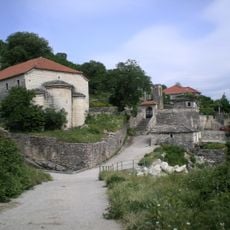
The monastery stands on a hill above the road linking Gjirokastër and Delvinë, in the western part of Dhuvjan village. Much of its 3,000 square metres is near-ruin, with walls, arches, the bell and the trapezaria at risk of falling, so explore with care. Spiro Panajoti, a retired teacher, cares for the site voluntarily.
In 2006, descendants of the village priest Papa Vllasi dug up an icon in their garden. Dated 1819, it bears the names of six saints and is said to hold bones of three of them. To prevent theft, villagers move the icon from place to place.
The community of curious travelers
AroundUs brings together thousands of curated places, local tips, and hidden gems, enriched daily by 92,842 contributors worldwide.