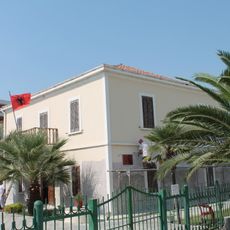
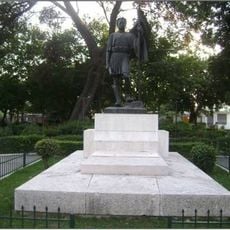
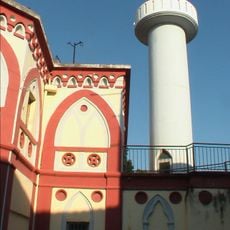
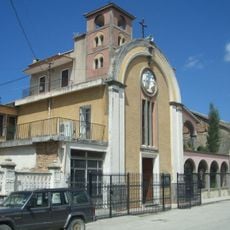
St. Mary's Monastery, Zvërnec, Byzantine monastery on Zvërnec Island, Albania
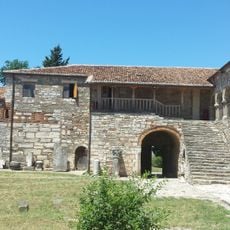
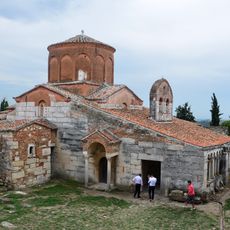
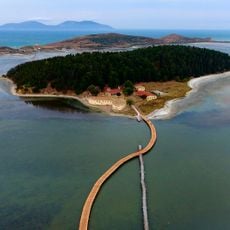
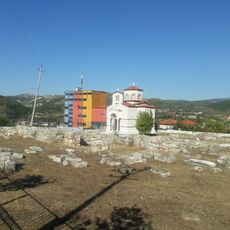
St. Mary's Monastery stands on Zvërnec Island in the Narta Lagoon. The church is a domed free-cross type in two building phases: an older naos and narthex, and a later exonarthex whose facade has seven arches on six columns, plus a bell tower at the west end. The drum and dome are laid in stone and tile fragments set in mortar. A limestone slab, 1.87 m by 0.67 m, lies in the naos floor.
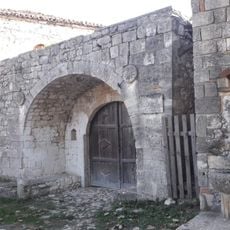
The founding of St. Mary's Monastery is dated by scholars to somewhere between the 10th and 14th centuries: Albanian scholar Aleksandër Meksi places the church in the 13th–14th centuries, while Helmut and Herta Buschhausen argue for the 10th century. At the time the island and mainland belonged to the parish of Nartë, and the village of Zvërnec did not yet exist. Much of the complex most likely dates to the 19th century, and it has been protected as a cultural monument since 1963.
The monastery houses an important icon of St. Mary created by Tërpo Zografi, an 18th century Albanian artist, which visitors can still see today. The work reflects the artistic traditions of the region and continues to be venerated.
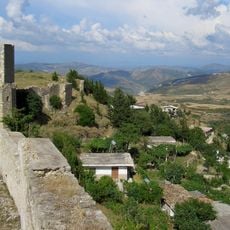
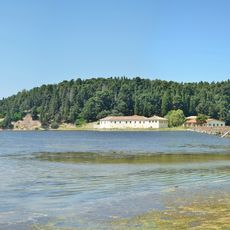
The monastery stands on Zvërnec Island in the Narta Lagoon, northwest of Vlorë. The island is reached from the village of Zvërnec on the lagoon shore, and the church sits among pines on the small island. The last restoration of the building was carried out in 2003.
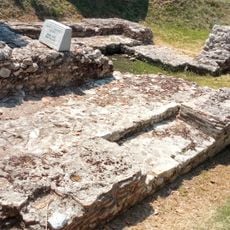
The only inscription in the church is a limestone slab in the floor of the naos, measuring 1.87 m by 0.67 m and framed by Ionic capitals. Its text, written in Byzantine Greek, was translated in 1902 by a University of Vienna professor who visited the monastery. Theofan Popa linked the grave to Anna Komnene's account of a duke sent to the region in the 11th century.
The community of curious travelers
AroundUs brings together thousands of curated places, local tips, and hidden gems, enriched daily by 92,755 contributors worldwide.