Castle of Gjon Boçari, Medieval fortress in Tragjas, Albania.
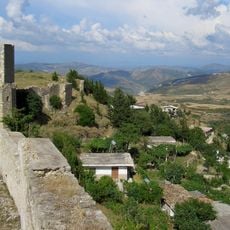
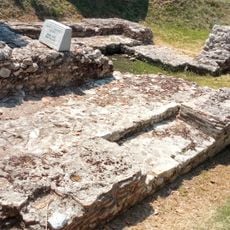
Castle of Gjon Boçari is a rectangular stone fortification measuring 30 by 18 metres, with polygonal towers at its northern and eastern corners. Its curtain walls are 1.80 metres thick and rise 4 metres to a surviving wall-walk, reached by two staircases built inside the northwest and southeast walls. The single entrance lies in the middle of one of the narrow sides.
The Boçari family, one of the main Albanian families of Tragjas, built the castle in the 16th century and enlarged it in the 17th. In 1904 the Austrian archaeologist Carl Patsch described the castle and the extended ruins of buildings north of it, and thought the garrison lived in tents or light wooden structures. The Albanian monument was approved as a cultural heritage site in 1963.
The castle is a protected cultural monument of Albania, approved as monument no. 6 on 15 January 1963. The Austrian archaeologist Carl Patsch described it in 1904, noting ruined buildings north of the walls and suggesting the garrison lived in tents or light wooden structures. Its layout resembles the enclosures of Albanian monasteries built in the second half of the 17th century.
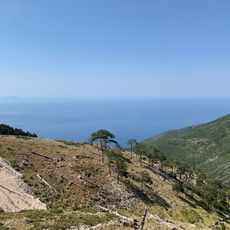
The ruin is located in a rural area and is best reached by asking for local directions or hiring a guide. Proper footwear is important because the ground is uneven and some parts of the structure are difficult to access.
The Boçari family was known for ruling as independent lords and used this fortress as a symbol of their power in the region. Local accounts highlight how important small Albanian family clans were in resisting larger powers.
The community of curious travelers
AroundUs brings together thousands of curated places, local tips, and hidden gems, enriched daily by 93,758 contributors worldwide.