Shengavit Settlement, Early Bronze Age settlement in Yerevan, Armenia.
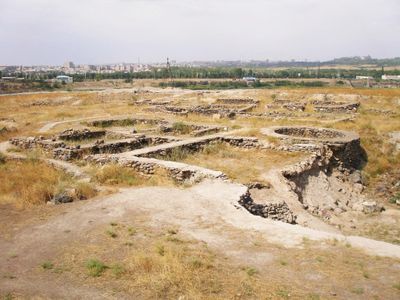
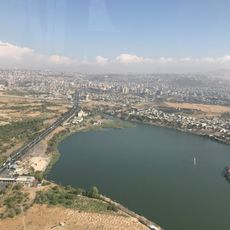
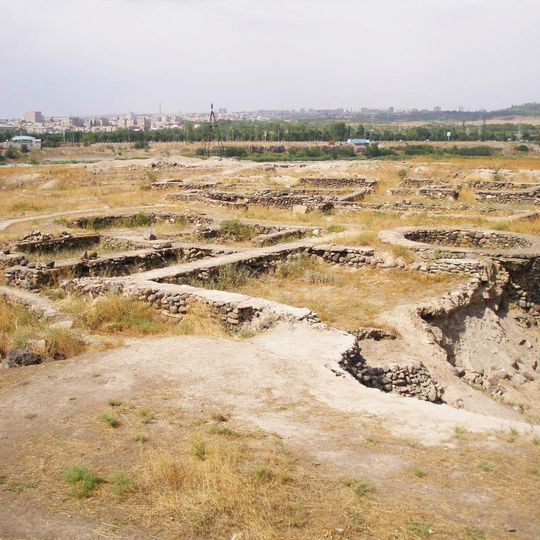
Shengavit Settlement is an Early Bronze Age site on a hill by Yerevan Lake in Yerevan's Shengavit district. Excavations reached bedrock and exposed eight or nine layers from about 3200 to 2500 BC. The six-hectare town had a four-metre-wide stone wall with towers, round and square mud-brick dwellings, ritual hearths, grain silos and a paved underground passage down to the Hrazdan River.
The site was first inhabited around 3000 BC and remained occupied for nearly a millennium, reflecting the development of the Kura-Araxes culture in the Caucasus. Multiple settlement phases visible in eight distinct layers show how the community evolved and adapted over centuries.
The name Shengavit combines Armenian shen (prosperous) and gavit (narthex, parish), taken from the village later built on the site. Excavations found crucibles holding up to 10 kg of smelted metal and storage containers for amounts far beyond local needs, pointing to organized workshops. Pottery typically has a black burnished exterior and reddish interior with incised or raised designs.
The site is open to visitors with marked pathways and informational signs to guide exploration of the excavated areas. Plan to spend adequate time walking through the grounds to fully appreciate the extent of the ruins and understand how the settlement was organized across different levels.
Excavations in 2010 and 2012 uncovered a series of ritual installations, and a large stone obelisk found in one structure matches another from Mokhrablur, 4 km south of Ejmiatsin. Clay statuettes from the site are thought to belong to the same central ritual practice.
The community of curious travelers
AroundUs brings together thousands of curated places, local tips, and hidden gems, enriched daily by 92,649 contributors worldwide.