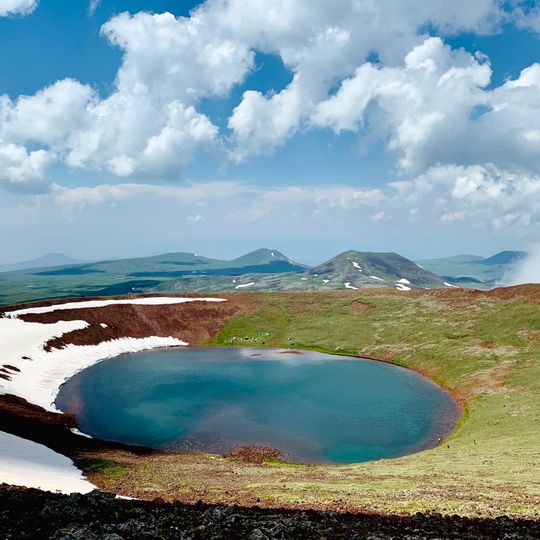
Azhdahak, Volcanic summit in Geghama Mountains, Armenia
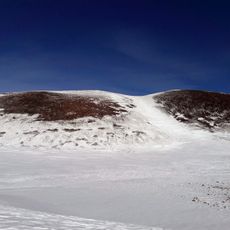
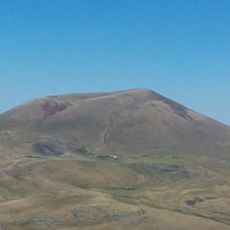
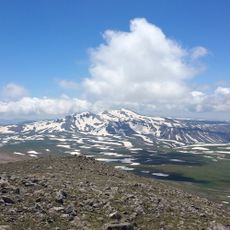
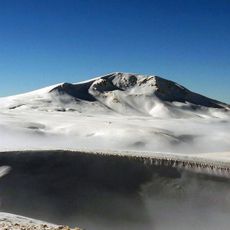
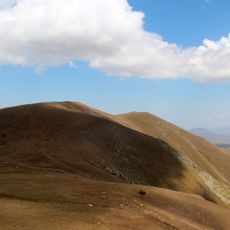
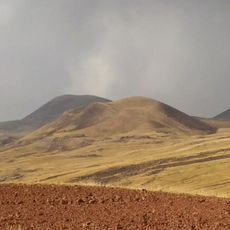
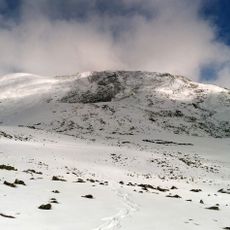
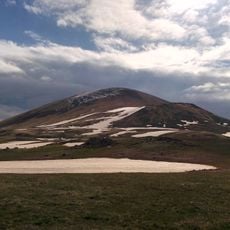
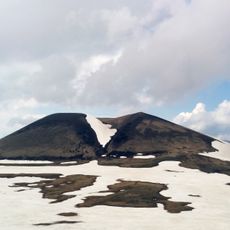
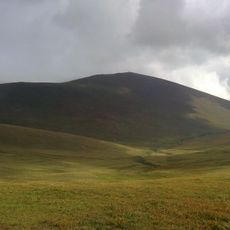
Mount Azhdahak rises to 3,597 meters and features a crater lake at its peak, with slopes covered in volcanic materials such as slag and lapilli. The landscape shows traces of this volcanic activity throughout.
Azhdahak is a complex slag cone built by eruptions in the Upper Anthropogene, formed of greyish scoria, lapilli and volcanic bombs. Its cone measures up to 1,600 m across and rises about 370 m, with lavas covering roughly 8 km², partly eroded and overlain by flows of the Tar volcano. The crater beside the summit, on the north-western side, now holds a small unnamed lake.
In Armenian folklore, Azhdahak is the name of a dragon-man (vishap) and a king of the Medes, linked to the ancient Iranian Aži Dahaka, literally "Dragon Dahaka". The mountain also appears in the Russian Geographical-Statistical Dictionary as Naltapa, with its southern summit Ak-dag and northern summit Agmangan or Kyzyl-dag.
Climbing is possible from June through September when weather conditions are best and the route is most safely passable. The route to the summit passes through volcanic terrain, so sturdy footwear and plenty of water are essential.
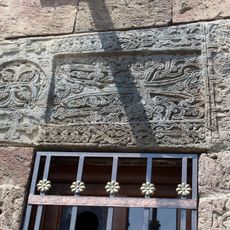
Around the mountain are numerous ancient petroglyphs depicting hunting scenes, celestial bodies, and mysterious stone carvings. These engravings provide insight into the activities and beliefs of people who lived here thousands of years ago.
The community of curious travelers
AroundUs brings together thousands of curated places, local tips, and hidden gems, enriched daily by 92,647 contributors worldwide.