Havuts Tar, Medieval monastery complex in Kotayk Province, Armenia
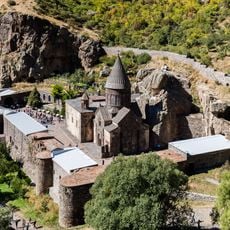
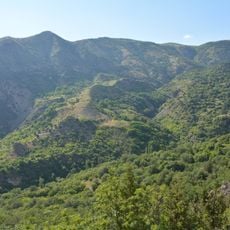
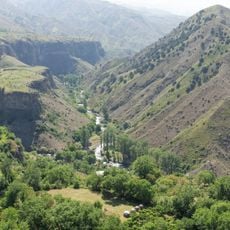
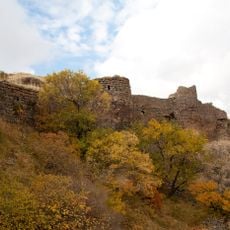
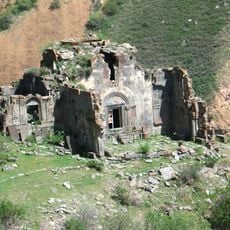
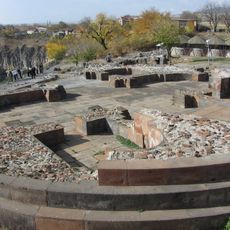
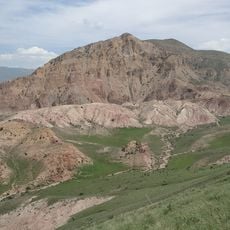
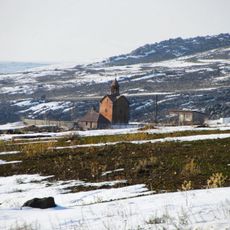
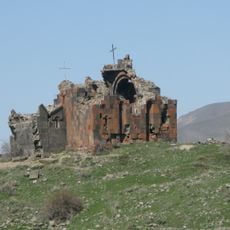
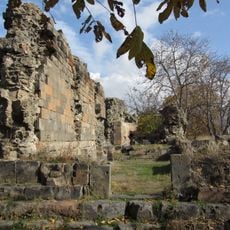
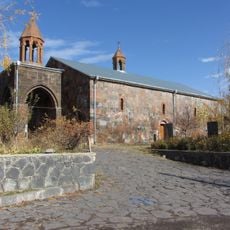
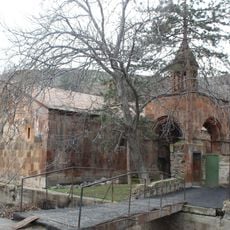
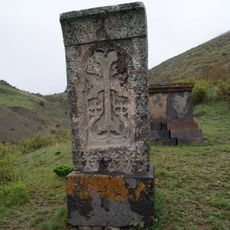
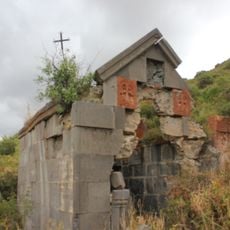
Havuts Tar is a medieval monastic complex perched on a mountain ridge overlooking the Azat River Valley, with two main churches and fortified walls bearing carved stone reliefs. The buildings are constructed from local stone and display the distinctive features of Armenian religious architecture from that period.
Gevorg Marzpetuni founded the church on the western outcrop in the 10th century; inscriptions record its rebuilding in 1013 by Grigor Magistros Pahlavuni, son of Vasak Pahlavuni and founder of Kecharis Monastery. Most of the monastic complex went up between the 12th and 14th centuries, and it became a major centre of learning and manuscript writing under the leader Elijah, with its oldest surviving manuscript dated 1214. A large earthquake in 1679 left it badly damaged and effectively abandoned; Catholicos Astvatsatur Hamadantsi rebuilt parts in the early 18th century, and further restoration came in the early 20th century.
From the 13th century, especially under the leader Yeghia, Havuts Tar became a major educational and manuscript centre of the Ayrarat region. Yesayu's school had a musical branch with a choir under his direction, and the oldest manuscript copied here dates from 1214, made by Grigor in 1297 and Stepanos in 1458.
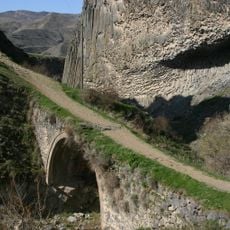
The site is accessed via a walking trail lasting about 30 minutes from the Khosrov State Reserve entrance. The path crosses through open landscape before reaching the monastery on the ridge.
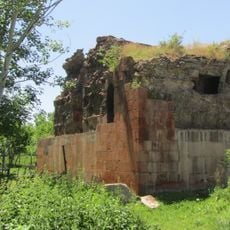
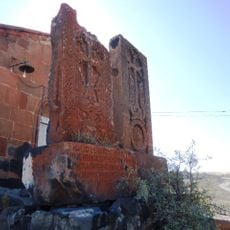
The Amenaprkich Church's walls are laid in an alternating checkerboard pattern of burnt orange and dark gray tuff, a deliberate two-tone masonry rather than a natural stone layering. Two tall vertical niches were built into the eastern wall to strengthen the structure against earthquakes. Bird carvings appear on the tympanum above the west portal, the south exterior wall and an interior niche.
The community of curious travelers
AroundUs brings together thousands of curated places, local tips, and hidden gems, enriched daily by 94,257 contributors worldwide.