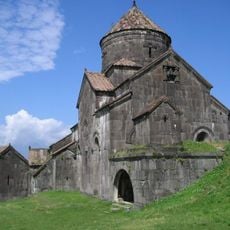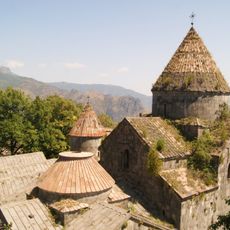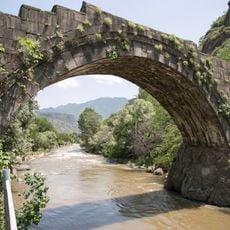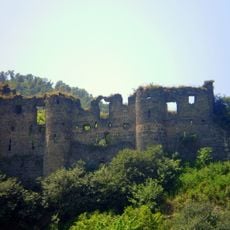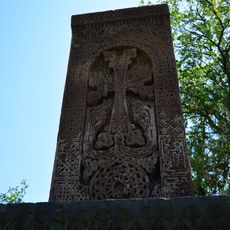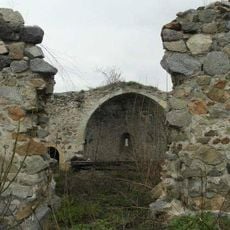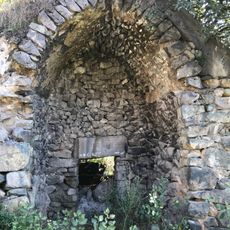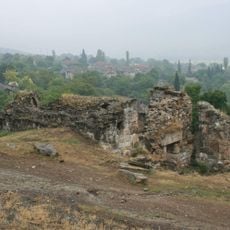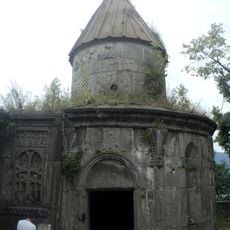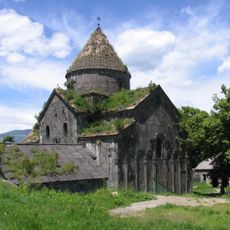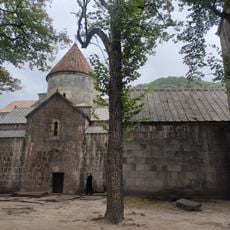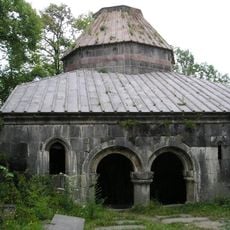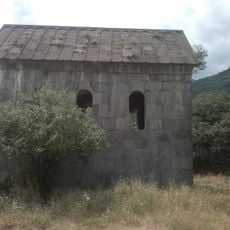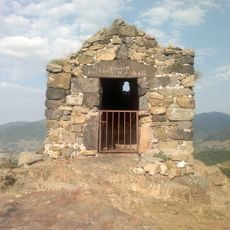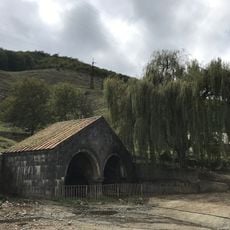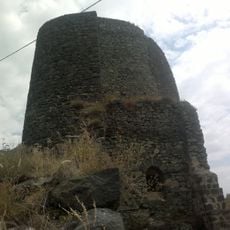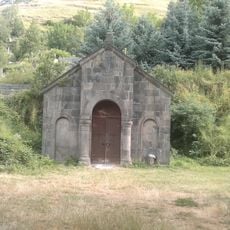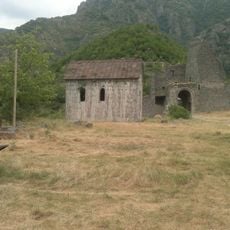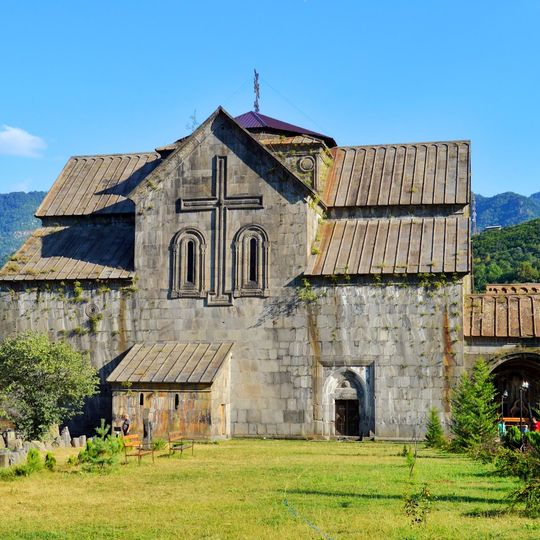
Akhtala Monastery, Medieval monastery and fortress in Lori Province, Armenia.
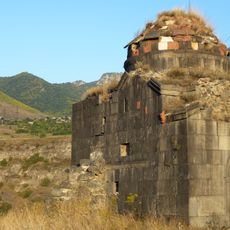
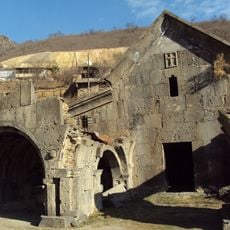
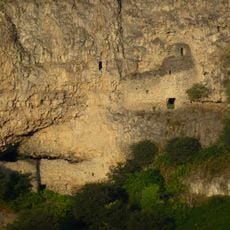
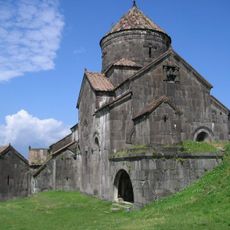
Akhtala Monastery, also called Pghindzavank, stands on a rocky outcrop in the Debed canyon above the town of Akhtala, Lori Province. Its main church, Surp Astvatsatsin, rises within a walled compound whose only entrance is on the northern side, flanked by bell-shaped towers. The walls and towers are built of bluish basalt laid with lime mortar, and deep canyons protect the site on three sides.
The site was founded in the late 10th century by the Kyurikids, a ruling family connected to the Bagratuni dynasty. They built on foundations that already existed from earlier Bronze Age and Iron Age settlements at this location.
The monastery's name shifted with its community: called Pghndzahank (Copper Mine) in the Middle Ages, it became "Meramani" to the Greek miners settled here from Gümüşhane in 1763, whose inscriptions remain on the walls. Pilgrimage days are held on September 20–21, when Armenians, Greeks and Georgians visit.
The monastery sits on steep terrain, so wear sturdy shoes when moving between the different levels and steps across the complex. Weather can shift quickly at this elevation, and bringing extra layers is a good idea regardless of the season.
The site's original name, Pghndzahank, means something close to copper mine, pointing to ore deposits that were once worked in the area. The name Akhtala, which replaced it, comes from Turkic roots and reflects the many different peoples who passed through and left their mark here.
The community of curious travelers
AroundUs brings together thousands of curated places, local tips, and hidden gems, enriched daily by 92,638 contributors worldwide.