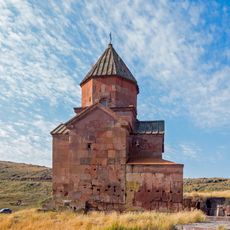
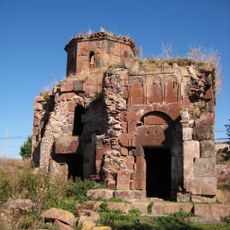
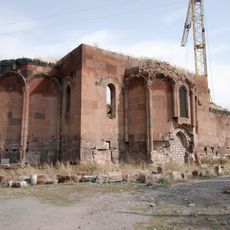
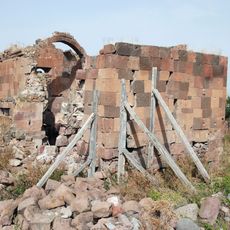
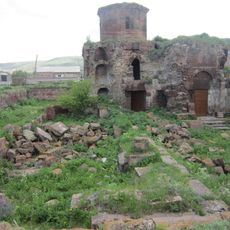
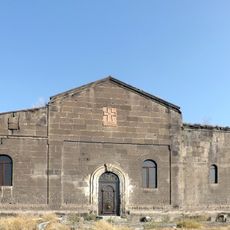
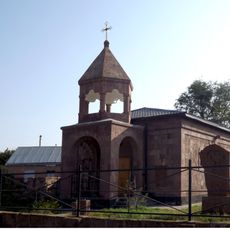
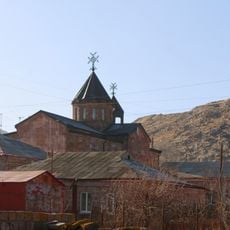
Horom Citadel, Bronze Age fortress in Shirak Province, Armenia.
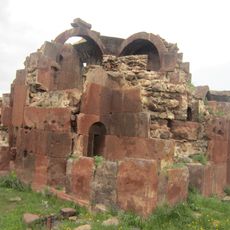
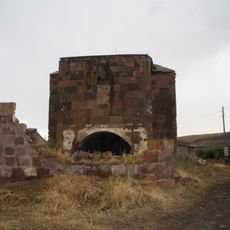
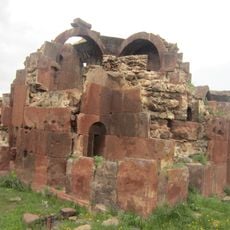
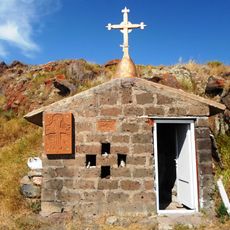
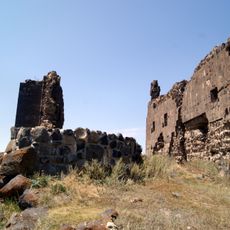
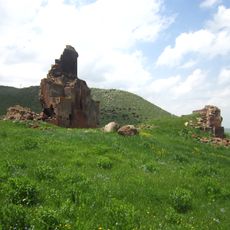
Horom Citadel, also called Orom or Horrom, is a cyclopean fortification on two large hills south of the main road opposite Kamut Reservoir, about 1 km east of Horrom village in Shirak Province. Its walls, built of large tuff blocks, enclosed roughly 4 km², with a total defensive perimeter estimated at 7 km. The south-western part holds a walled inner citadel, next to it a large paved structure with a semicircular apse, and around it stone-cist graves.
The fortress began as a Bronze Age settlement and remained occupied through the Urartian period, spanning roughly a thousand years of continuous habitation. Each era of occupation left traces through pottery and tools that reveal how the region maintained importance across multiple civilizations.
Local tradition recorded by folklorist Aram Ghanalanyan links the name Horom to Hripsime, a daughter of the king of Ani, who came here for the summer and built a fortress on Ghalachi hill; the village was named after her. Archaeologist Ye. Bayburdyan instead derived the name from Rome, citing Roman cultural traces in the excavations.
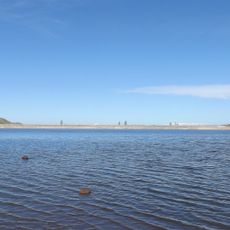
Horom Citadel lies about 1 km east of Horrom village in Shirak Province, on two hills south of the main road and opposite the dam and Kamut Reservoir. The ground is uneven and strewn with potsherds and obsidian flakes, so wear sturdy footwear. Parts of the site are affected by ongoing excavations.
The site forms part of a larger defense network with two other Urartian forts nearby at Ghak and Shvaghtapa, suggesting this area was systematically controlled and protected. The pattern of these three fortifications across the landscape reveals how ancient powers organized their military presence.
The community of curious travelers
AroundUs brings together thousands of curated places, local tips, and hidden gems, enriched daily by 92,681 contributors worldwide.