Rangiroa, Maritime boundary in French Polynesia, South Pacific Ocean
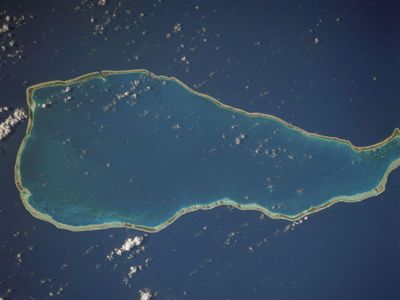
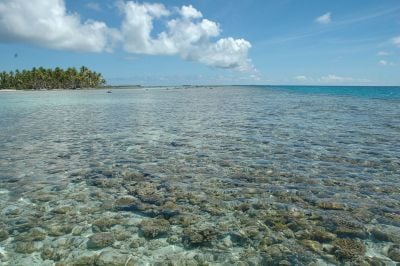
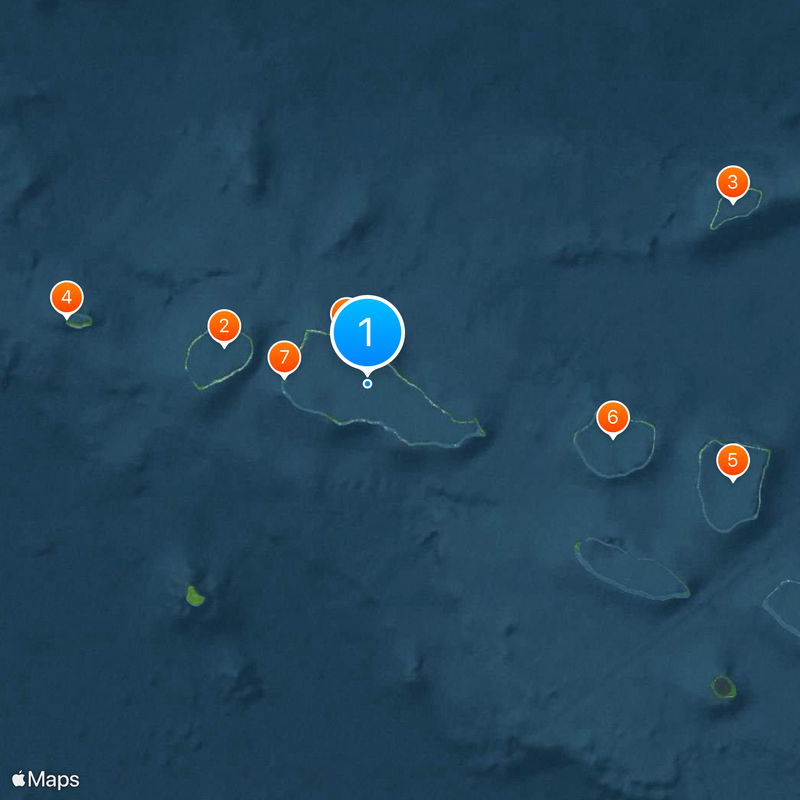
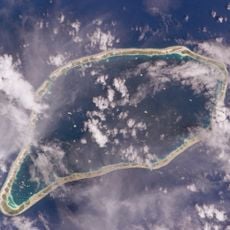
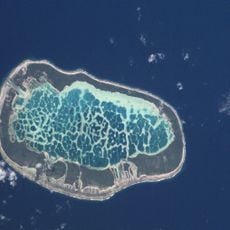
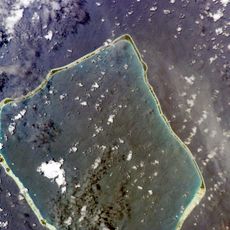
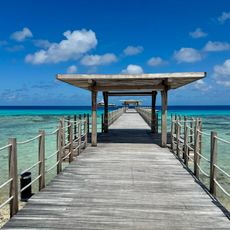
Rangiroa is an atoll in the Tuamotus, French Polynesia, in the South Pacific Ocean, surrounding one of the largest lagoons on the planet. The ring-shaped coral structure consists of more than 240 small islands separated by narrow channels, with only a few navigable passages allowing entry into the interior waters.
Polynesian settlers reached Rangiroa around the 10th century AD, digging at least 104 taro cultivation pits into the coral bedrock. Dutch explorers Jacob le Maire and Willem Schouten landed on 18 April 1616 and named it Vlieghen Eyland, 'Island of Flies', for the black flies that covered the landing party. Charles Wilkes's expedition visited on 7 September 1839.
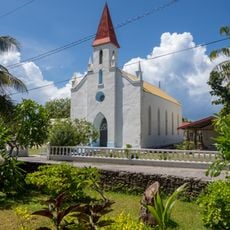
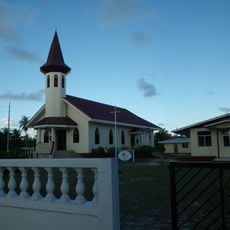
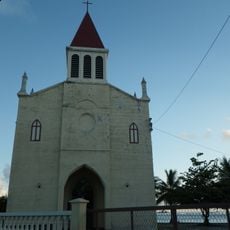
Rangiroa means 'vast sky' in Tuamotuan, and the atoll is also called Te Kokōta, Cook Islands Māori for the Hyades star cluster. Most islanders are Christian, a result of Catholic and Protestant missionary work; the Catholic Church maintains St. Michael's in Avatoru, St. Anne's chapel in Otepipi and Our Lady of Peace in Tiputa. Pearls farmed from the black-lip oyster Pinctada margaritifera come in shades from white to dark grey.
The two main passages, Tiputa and Avatoru, allow boats to enter the lagoon, though currents can vary greatly depending on the tide. Divers and snorkelers should check current conditions in the channels before entering the water.
Rangiroa's name means "vast sky" in Tuamotuan, and its lagoon is wide enough to have its own horizon. The atoll is the second largest in the world by lagoon area, after Kwajalein in the Marshall Islands. Its two passes, Tiputa and Avatoru, are the only openings in a reef over 200 km around.
The community of curious travelers
AroundUs brings together thousands of curated places, local tips, and hidden gems, enriched daily by 94,255 contributors worldwide.