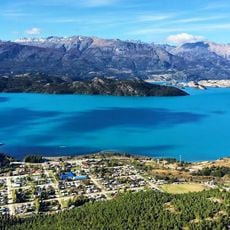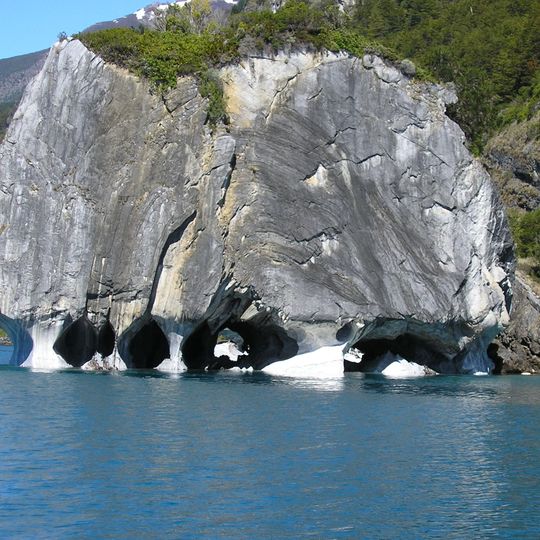
Catedral de Mármol, Natural marble formation on General Carrera Lake, Chile.
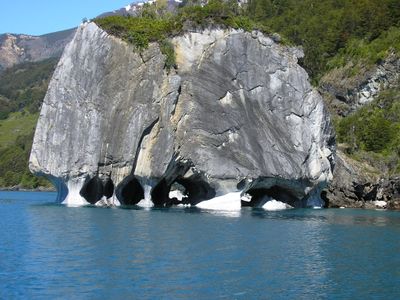
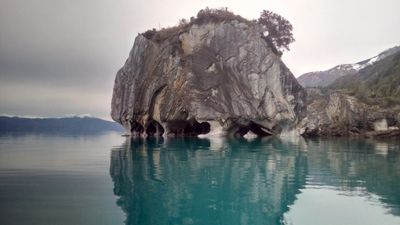
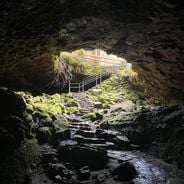
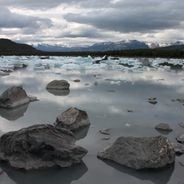
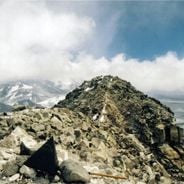
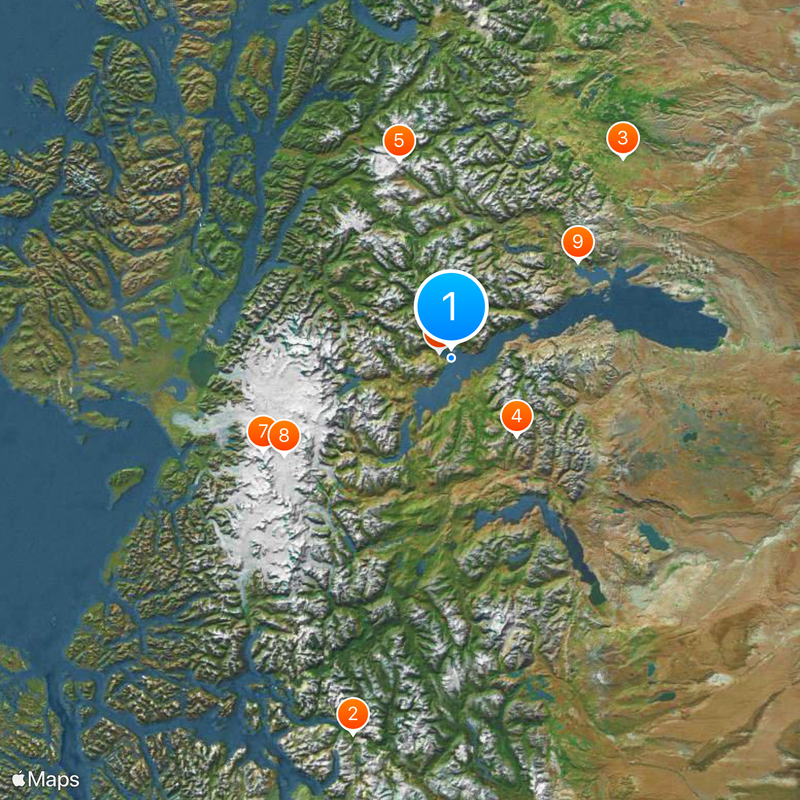
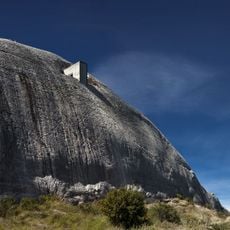
Catedral de Mármol is a large marble islet on the western shore of General Carrera Lake, near Puerto Río Tranquilo. Its pale grey and white stone rises steeply from the water, with dark streaks running down the face and caves and arches hollowed out at the waterline. The flat top holds patches of dry vegetation and a small tree.
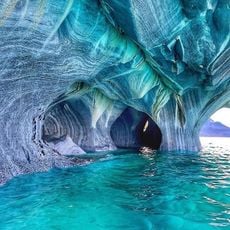
The marble dates from the Upper Paleozoic, about 300 million years ago, and part of the stone may have formed near the Equator before drifting to Patagonia. The caves themselves are a karst phenomenon of the last 15,000 years, dissolved by Lake General Carrera after the final glacial period. The name Capilla de Mármol was recorded by Clemente Onelli in 1904 and spread after geologist Arnold Heim's 1939 visit; the sector became a nature sanctuary in 1994.
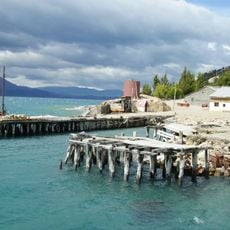
The name "Capilla de Mármol" appeared in the late 19th or early 20th century during geographic surveys of the Chile-Argentina border; the Italo-Argentine explorer Clemente Onelli recorded it in his 1904 book Trepando los Andes. The larger islet is called "Catedral de Mármol" to distinguish it from the smaller chapels. Boat trips leave from Puerto Río Tranquilo and, when water levels are low, pass inside the caves.
Visits are best between September and March when water levels allow good access to the caves. Tours depart from Puerto Río Tranquilo and involve traveling by small boat.
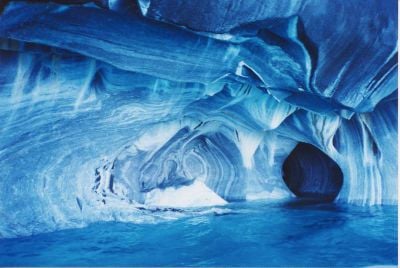
The cave walls display swirling patterns in shades of gray, blue, and white that reflect in the glacial water below. These color variations result from different mineral compositions within the marble structure.
The community of curious travelers
AroundUs brings together thousands of curated places, local tips, and hidden gems, enriched daily by 92,609 contributors worldwide.