Port of San Antonio, Commercial port in San Antonio, Chile
The Port of San Antonio is a large facility on the Pacific coast of central Chile that handles ships carrying containers, bulk cargo, and vehicles. The site spreads across multiple zones with docks, storage areas, and equipment for moving cargo in and out of the country.
A Portuguese merchant, Antonio Núñez de Fonseca, built the first warehouse here in the late 16th century to store farm produce and salted dried fish. By 1770 the bay held 26 fishing families. In 1844 it was declared a minor port as "San Antonio de las Bodegas", and on 14 January 1850, under President Manuel Bulnes, the first public works and a wharf plan were ordered. After the Spanish bombardment of Valparaíso it was upgraded to a major port.
The port's name comes from Antonio Núñez de Fonseca, a Portuguese merchant who built the first warehouse on these shores in the late 16th century to store farm produce and salted dried fish. In 1770 the cove held 26 families, mostly fishermen who also supplied ships anchored in the bay.
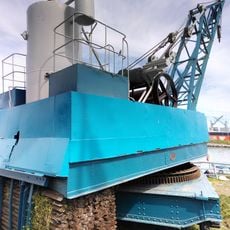
This is an active commercial terminal, not a site open to tourists; access to docks and cargo areas is restricted. Views of the harbour and the historic Grúa 82, a steel crane from 1911 declared a national monument, are possible from public streets near the waterfront. The crane lifted up to 22 tonnes and was used to build the Panul breakwater.
The 1912 first stone of the port improvement works was laid by President Ramón Barros Luco aboard the Grúa 82, a steel crane built in 1911 that could lift 22 tonnes. It is now a national historic monument and was used to build the Panul mole.
The community of curious travelers
AroundUs brings together thousands of curated places, local tips, and hidden gems, enriched daily by 92,981 contributors worldwide.