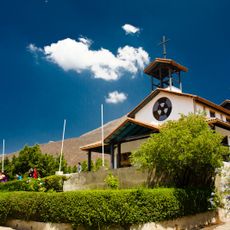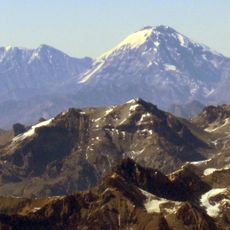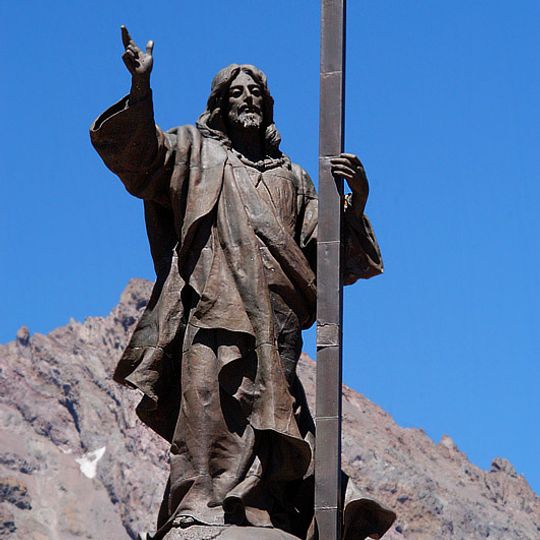
Christ the Redeemer of the Andes, Peace monument at La Cumbre Pass, Argentina.
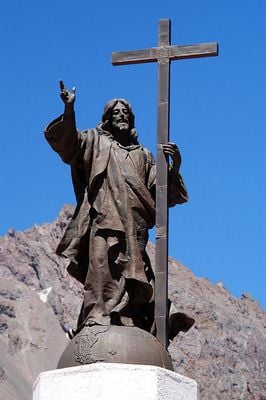
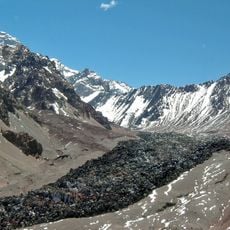
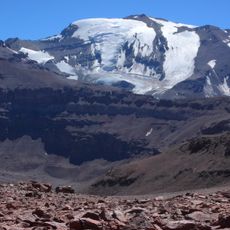
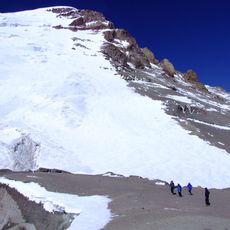
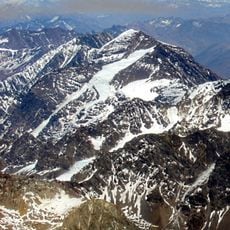
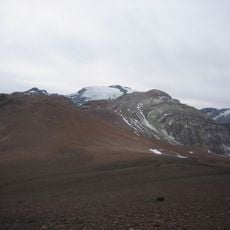
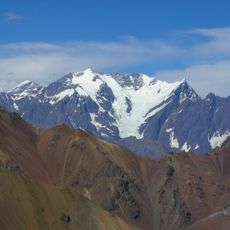
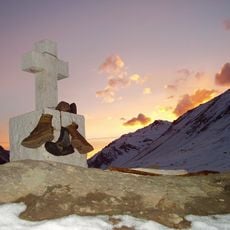
The bronze statue stands at an elevation of 3,832 meters (12,572 feet) on the Argentina-Chile border, featuring Christ holding a cross against the Andes backdrop. The figure reaches seven meters (23 feet) in height and rests on a massive granite pedestal measuring approximately six meters (20 feet). The monument sits at La Cumbre Pass and marks the watershed between the Atlantic and Pacific oceans. The right hand of the statue is raised, while the left holds the cross, and the face looks westward toward Chile.
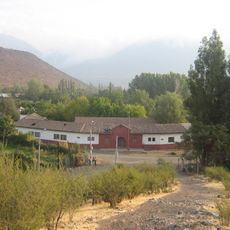
Bishop Marcolino del Carmelo Benavente promised in 1900 to raise a Christ of Peace, and Buenos Aires sculptor Mateo Alonso made the bronze figure, shown first in the Lacordaire School patio. Ángela de Oliveira Cézar de Costa, whose brother was a general on the frontier, pressed both governments to move it to the Andean pass after the 1902 Pactos de Mayo. It was inaugurated on 13 March 1904 before some 3,000 people, and Mendoza restored it in 1993.
The bronze plaque at the feet carries the words of Ramón Ángel Jara, Bishop of Ancud, spoken at the 1904 inauguration: the mountains will crumble before Chileans and Argentines break the peace sworn at the feet of Christ the Redeemer. A replica stands at the Peace Palace in The Hague, seat of the International Court of Justice. In 2004 the centenary was attended by Presidents Néstor Kirchner and Ricardo Lagos.
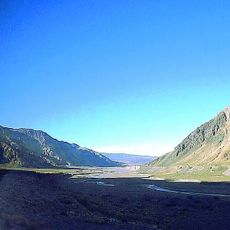
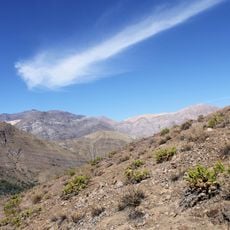
Access to the monument requires a 9-kilometer (5.6-mile) drive from Las Cuevas village and is only possible during summer months due to weather conditions. The road to the pass is unpaved and requires a sturdy vehicle, as it features steep switchbacks with narrow sections. Warm clothing is essential, as temperatures remain cool even in summer and strong winds are frequent. Visitors should arrive early in the day to avoid afternoon storms and bring sufficient water, as there are no facilities on site.
The claim that the bronze came from cannons of both armies is a popular belief that some historians doubt. The original cross, ruined by the mountain climate, was replaced in 1916 and its bronze turned into commemorative medals. The statue was moved 1,200 km by train and then carried up by mule.
The community of curious travelers
AroundUs brings together thousands of curated places, local tips, and hidden gems, enriched daily by 92,599 contributors worldwide.