El Plomo, Mountain summit in central Andes, Chile.
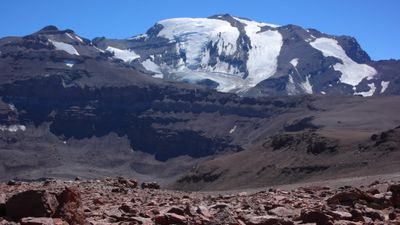
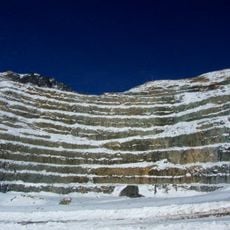
El Plomo is a mountain in the Andes near Santiago, Chile, reaching 5,444 metres. Its upper half is a broad mass of white snow and ice split by dark, jagged rock ridges, while below the snow line the face shows horizontal bands of steep cliffs and terraces over a slope of loose reddish-brown rock. The Incas built a ceremonial sanctuary on the summit.
The mountain was first climbed by Europeans in 1896 when Gustav Brandt and Rudolph Lucke reached the summit, marking an important milestone in regional mountaineering. Archaeological discoveries at the peak in later decades revealed evidence of earlier human activity at high elevation.
The Incas called the peak Apu, Quechua for "lord", and used it as a ceremonial site, climbing to the summit in the 15th century. Offerings of gold, silver and Spondylus shell figurines were buried there, and the Santiago district of Apoquindo takes its name from Quechua words meaning "flowers for the Apu". The 1954 child mummy is now held at the Museo Nacional de Historia Natural in Santiago.
The best climbing season runs from November through March, when lower sections of the mountain have less snow cover. The route demands good physical fitness and mountaineering experience due to the altitude and steep terrain.
The mountain gained attention through a tragic 1932 plane crash that remained hidden under ice and snow until the wreckage was discovered in 1934. This finding revealed both the harsh weather conditions of the region and its role as a witness to human events at extreme altitude.
The community of curious travelers
AroundUs brings together thousands of curated places, local tips, and hidden gems, enriched daily by 93,583 contributors worldwide.