National Astronomical Observatory, Astronomical observatory in Las Condes, Santiago, Chile
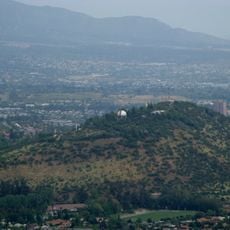
The National Astronomical Observatory of Chile occupies the summit of Cerro Calán in Las Condes, where its campus was completed in 1962. The site houses the 1.2 m MINI millimeter-wave Cassegrain reflector, moved from CTIO in 2005 and installed in a new dome in 2011, plus a 0.45 m GOTO reflector and two 28 cm refractors by Heyde and Gautier used for outreach.
The observatory traces back to the Gillis Expedition of the United States Naval Observatory, led by James Melville Gilliss, who arrived in Chile in 1849 and set up equipment on Santa Lucia Hill to observe Mars and Venus. In 1852 Gilliss sold the instruments and buildings to the Chilean government, which founded the National Astronomical Observatory that year. After director Carlos Guillermo Moesta noticed the hill's rock shifted in daytime heat, the observatory moved to Quinta Normal in 1862, then to Lo Espejo under Friedrich Ristenpart from 1908, and finally to Cerro Calán, completed in 1962 under Federico Rutllant. The University of Chile took charge by decree on 14 July 1927.
The observatory's public role grew from its 1927 transfer to the University of Chile, which made it an advisory body on astronomical matters for the country. Its Gautier and Heyde refractors, both 28 cm, are now used for outreach rather than research, and the 0.45 m GOTO telescope bought in 2002 with a Japanese government grant serves undergraduate instruction.
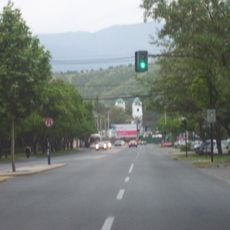
The observatory stands on Cerro Calán in Las Condes, an eastern suburb of Santiago, and is reached by road up the hill; the campus dates from 1962. Access is limited by ongoing research, so confirm opening and weather before setting out. The 1.2 m millimetre-wave telescope was installed in its dome in 2011.
The 1.2 m millimeter-wave telescope now on Cerro Calán was built in 1982 and first operated at Cerro Tololo, where it surveyed molecular clouds. In 2005 it was moved to Santiago and installed in a new dome in 2011; it maps the densest regions of molecular clouds, where stars form, and can chart carbon monoxide across the southern sky.
The community of curious travelers
AroundUs brings together thousands of curated places, local tips, and hidden gems, enriched daily by 93,848 contributors worldwide.