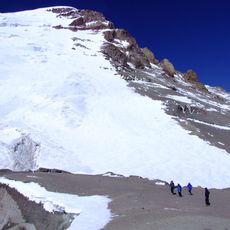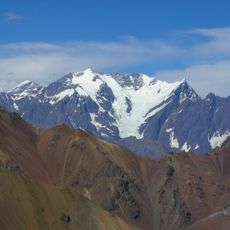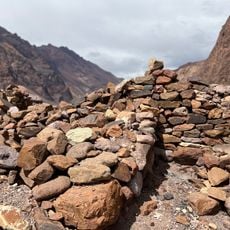
Puente del Inca, Natural arch in Las Heras Department, Argentina.
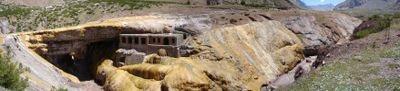
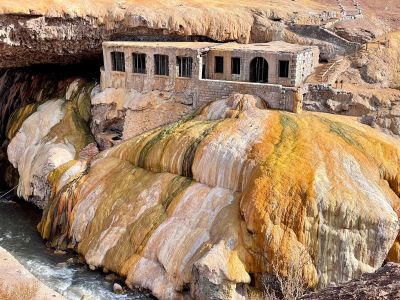
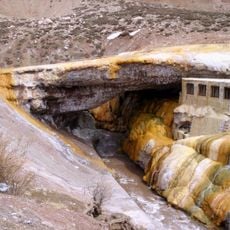
Puente del Inca is a natural bridge of mineralized rock spanning the Las Cuevas River at 2,730 meters elevation in the Argentine Andes. The structure resembles a stone hall with stalactites and displays intense yellow, red, and brown colors from deposits left by thermal springs that still flow beneath the surface.
The geological formation began thousands of years ago through glacier movements and hot springs that hardened debris with minerals. Charles Darwin sketched the formation in March 1835 and described the large stalactites already present at that time.
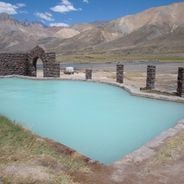
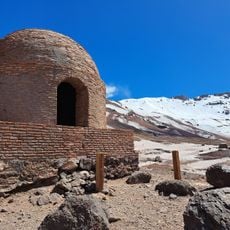
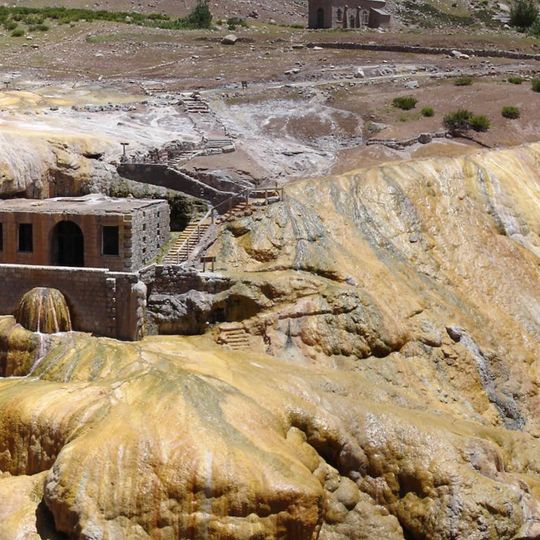
The name comes from an old legend about a natural bridge that saved a sick member of the Inca royal family. The abandoned thermal baths from the early twentieth century sit right next to the formation and still show the orange and ocher deposits left by the mineral-rich water.
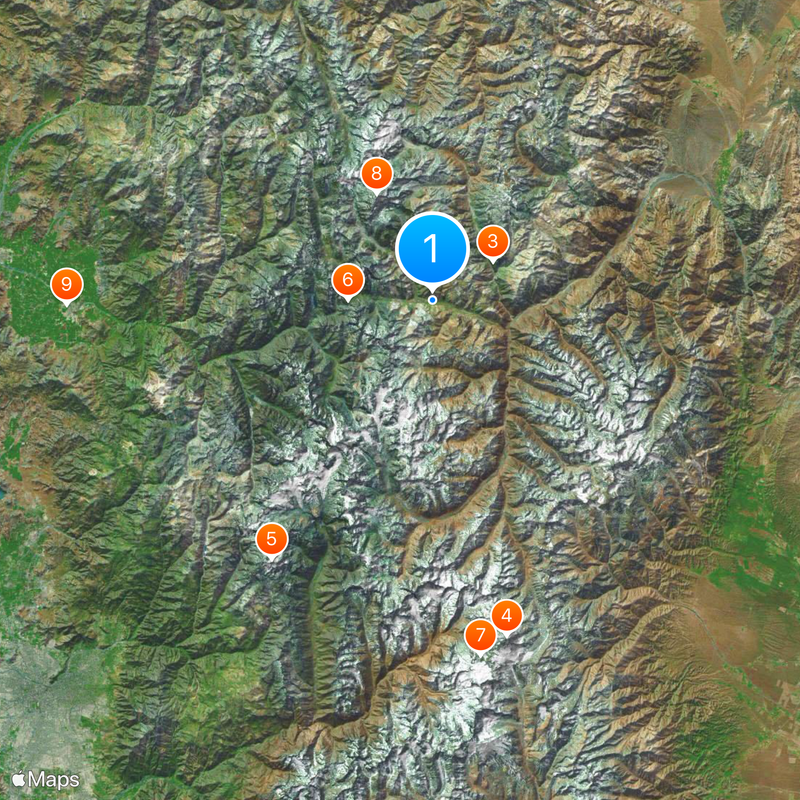
The site sits directly along Route 7 between Mendoza and the Chilean border, with parking areas and easy access from the roadside. The best period to visit is between November and March when snow conditions in the mountains are more favorable and the road is safer to travel.
The water still seeping through the formation maintains a temperature around 33 degrees Celsius and constantly changes the surface color patterns. People used to bathe in the natural pools, but access is now closed to protect the geological structure.
The community of curious travelers
AroundUs brings together thousands of curated places, local tips, and hidden gems, enriched daily by 91,995 contributors worldwide.