Tupungato Volcano, Extinct stratovolcano in Central Andes, Chile and Argentina.
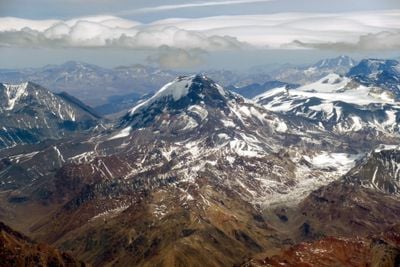
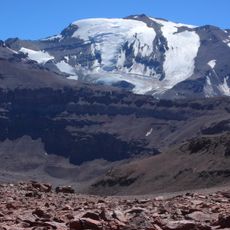
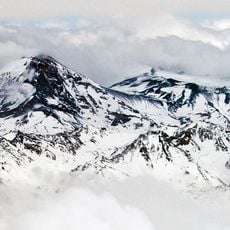
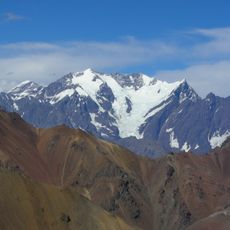
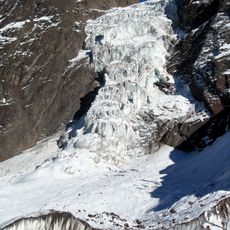
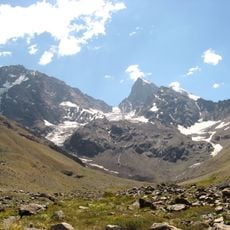
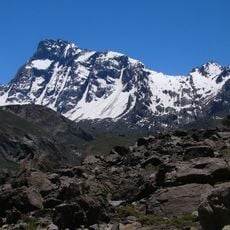
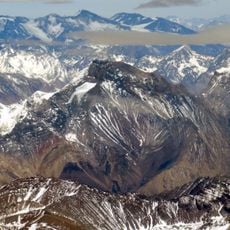
Tupungato Volcano is a Pleistocene lava dome on the Argentina–Chile border, the highest Andean peak south of Aconcagua, with a summit elevation of 6,570 m (Chilean mapping gives 6,635 m). Its broad cone rises above neighbouring summits, its upper slopes are dark rock under irregular snow, and a wide glacier tongue descends its lower right flank.
Matthias Zurbriggen and Stuart Vines reached the summit in 1897 as the first mountaineers during their Andes expedition. Later in 1947, an aircraft crashed into the glaciers on the north face, with wreckage parts uncovered only in 2000.
The name Tupungato comes from the Huarpe language and means viewpoint of the stars. The Argentine department of Tupungato in Mendoza, a wine-producing region, is named after the volcano. The Colorado River rises on its slopes and flows into the Maipo.
A full ascent takes around 13 days with several high-altitude camps and requires specialist equipment as well as the company of experienced mountain guides. The best travel window falls between December and March, when days are longer and weather becomes somewhat more stable.
The aircraft Star Dust vanished in 1947 during a flight across the Andes and remained missing for over 50 years. The wreckage emerged from the melting glacier only in 2000 and solved the mystery of the disappearance.
The community of curious travelers
AroundUs brings together thousands of curated places, local tips, and hidden gems, enriched daily by 94,070 contributors worldwide.