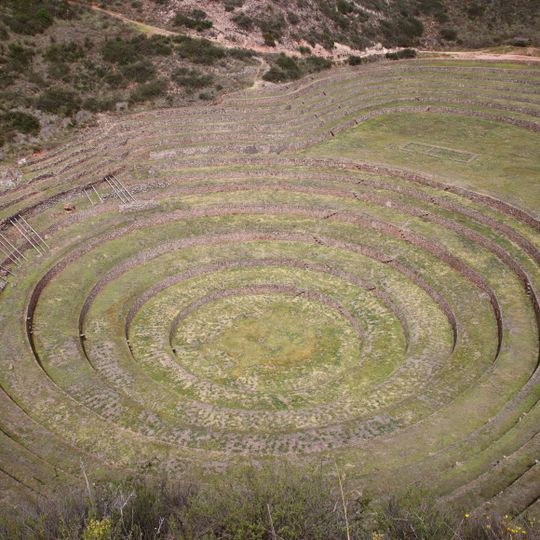
Moray, Inca agricultural research center in Cusco Region, Peru
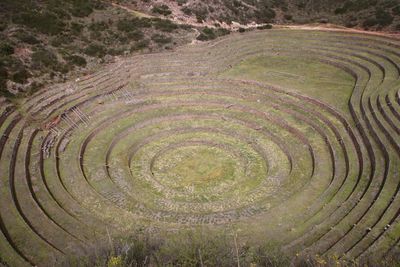
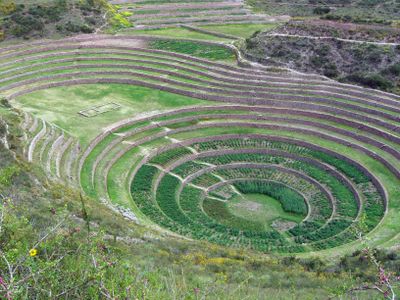
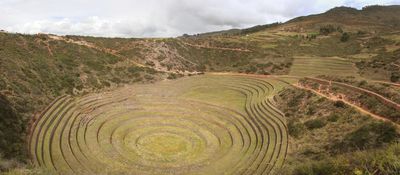
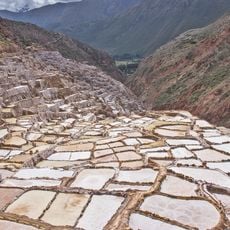
Moray is an archaeological site in Urubamba Province, Peru, that consists of a set of circular terraces arranged like an amphitheater sunk into the landscape. The deepest of the three main structures descends roughly 100 feet (30 meters) below ground level, while the stone walls of each level stand roughly shoulder height.
The site was probably built between the 6th and 10th centuries, when the Maras culture carved out the first terraces. The Inca Empire later expanded and refined the structure from the 12th century onward for systematic experiments with crops.
The name likely comes from the Quechua word for corn or from a type of dehydrated potato common throughout the Andes. Visitors today see the terraced bowl as a symbol of farming knowledge passed down through generations and still applied in the surrounding countryside.
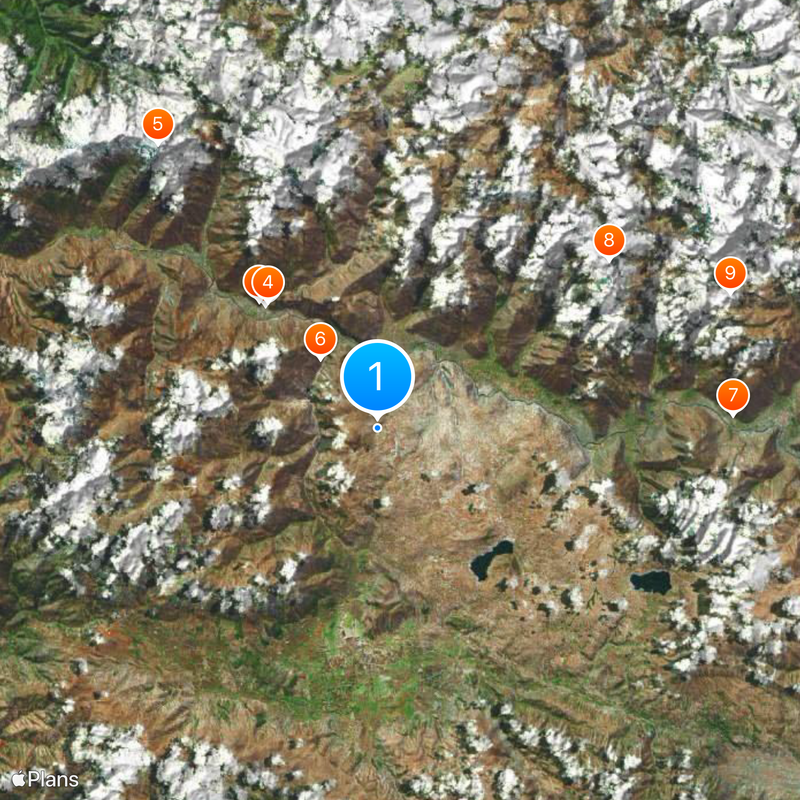
The site lies about an hour's drive northwest of Cusco at an elevation of roughly 11 100 feet (3 400 meters) and is reached by a paved road. A visit typically takes an hour and combines well with stops in other villages of the Sacred Valley.
Each terrace has its own microclimate, with the temperature difference between the top and bottom levels reaching up to 27 degrees Fahrenheit (15 degrees Celsius). These conditions allowed experiments with around 250 plant species, including potato varieties that normally grow at different altitudes.
The community of curious travelers
AroundUs brings together thousands of curated places, local tips, and hidden gems, enriched daily by 91,245 contributors worldwide.