Huaca Rajada, Moche archaeological pyramid in Lambayeque department, Peru
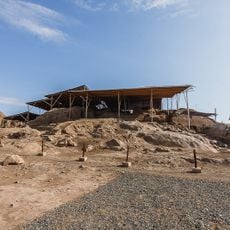
Huaca Rajada is a complex of three truncated adobe pyramids in the Lambayeque Valley, 35 km southeast of Chiclayo. Two large pyramids are linked by ramps and a rectangular platform; the smaller one, set apart by a plaza, held the royal tombs. A modern roof shelters the eroded mound, whose lower face shows rectangular panels and a doorway-like opening.
Construction began during the early Moche period and was expanded and rebuilt multiple times in later centuries. One of its most significant discoveries occurred in the late 20th century.
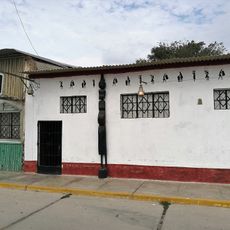
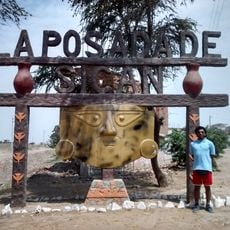
The name Sipán comes from the nearby village of about 1,500 inhabitants. Moche smiths made gold and silver ornaments from thin copper-alloy sheets, plating them with gold films only 0.5 to 2.0 μm thick. Among the finds are ear ornaments of gold inlaid with lapis lazuli and a necklace of peanut-shaped beads, half gold and half silver.
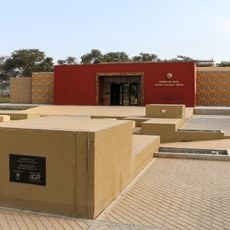
Plan to spend a few hours exploring the excavation areas and viewing the displayed artifacts. The site is easy to reach, but offers little shade, so bring sun protection.
The gold on many Sipán objects is only a surface film: smiths hammered copper into sheets, dipped them in a corrosive solution boiled from desert salts, then heated them to 500–800 °C so a gold layer 0.5–2.0 μm thick bonded to the metal. The silver head-shaped beads, about 4 by 5 cm, were hammered and annealed repeatedly and cleaned with plant juices or stale urine, leaving a surface that looks like pure silver but holds only 18% of it.
The community of curious travelers
AroundUs brings together thousands of curated places, local tips, and hidden gems, enriched daily by 94,345 contributors worldwide.