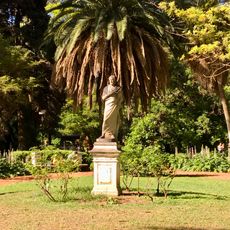
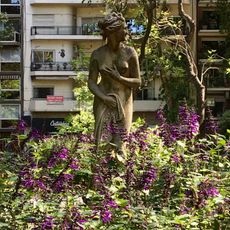
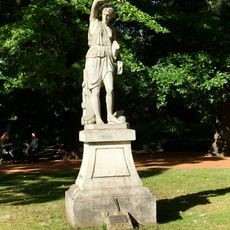
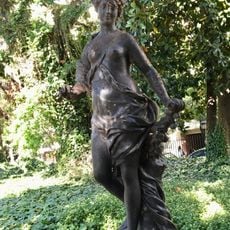
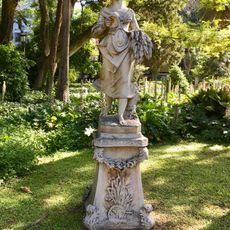
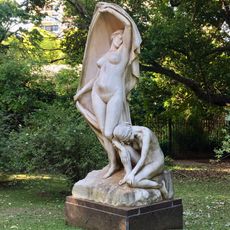
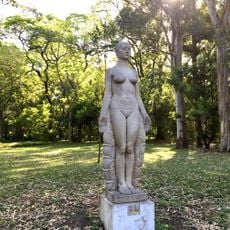
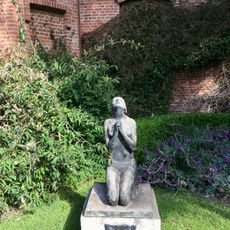
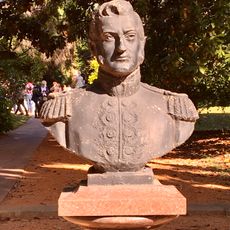
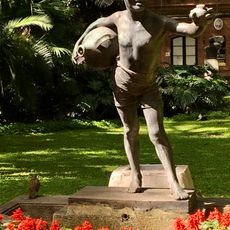
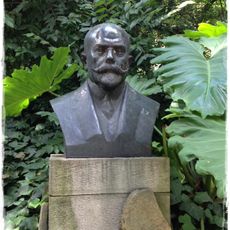
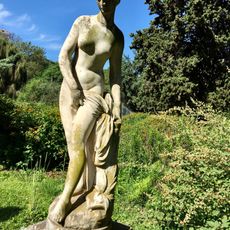
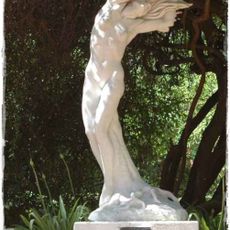
Saturnalia by Ernesto Biondi, Bronze sculpture in Palermo Botanical Garden, Buenos Aires, Argentina
Saturnalia by Ernesto Biondi is a patinated bronze group in the Buenos Aires Botanical Garden, a 1909 cast of the 1900 original. Ten life-size figures in imperial dress are arranged horizontally, three at each end and four in the centre: a patrician hauling up an obese priest, a laughing matron recoiling onto a gladiator, a soldier with a slave and a musician playing an aulos.
Ernesto Biondi worked on the group for the last ten years before showing it at the 1900 Paris Exhibition, where it won first prize. The Argentine Hernán Cullen Ayerza, who had studied with Biondi, acquired it in 1907 while secretary of the embassy in Rome and had the only cast made. It reached Buenos Aires on 14 February 1910 but stayed in customs until 1912, then stood in Ayerza's garden at Esmeralda 1275; in 1957 it was donated to the Museo Nacional de Bellas Artes.
The ten figures mix social classes of imperial Rome: a patrician, an obese priest, a gladiator, a soldier, a slave, a musician playing an aulos and a courtesan. The title refers to the festival of Saturn, held from 17 December, when social hierarchy was suspended and masters and slaves became equals. Biondi's group was judged immoral by the trustees of the Metropolitan Museum in New York, which refused it.
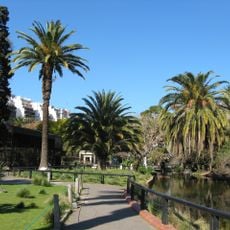
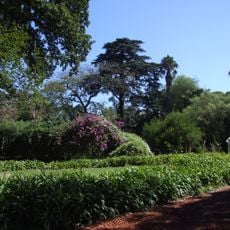
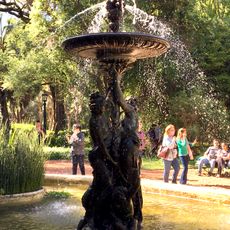
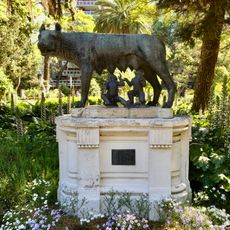
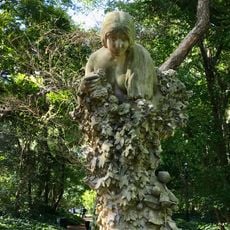
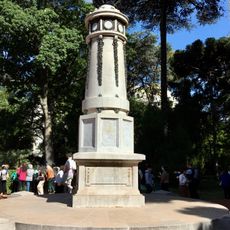
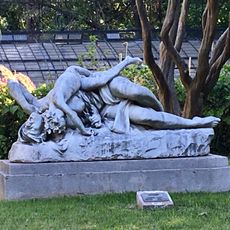
The sculpture is located in the Buenos Aires Botanical Garden and can be viewed while walking through the garden grounds. The site is easily accessible and positioned centrally among different garden sections, allowing visitors to discover the bronze figures naturally during their visit.
In 1981, during the military dictatorship, the sculpture was censured and left forgotten in a municipal warehouse. It was rescued in 1987, covered in manure, from some stables, and installed in the Botanical Garden in 1988.
The community of curious travelers
AroundUs brings together thousands of curated places, local tips, and hidden gems, enriched daily by 94,067 contributors worldwide.