Buenos Aires Eco-Park, Nature park in Palermo, Argentina
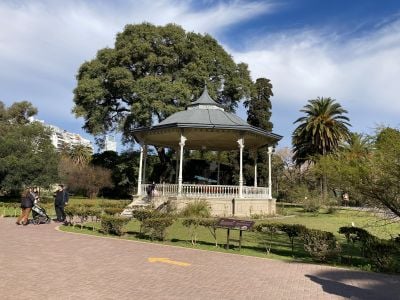
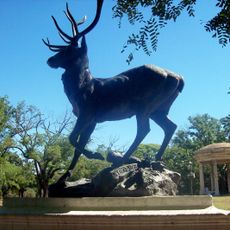
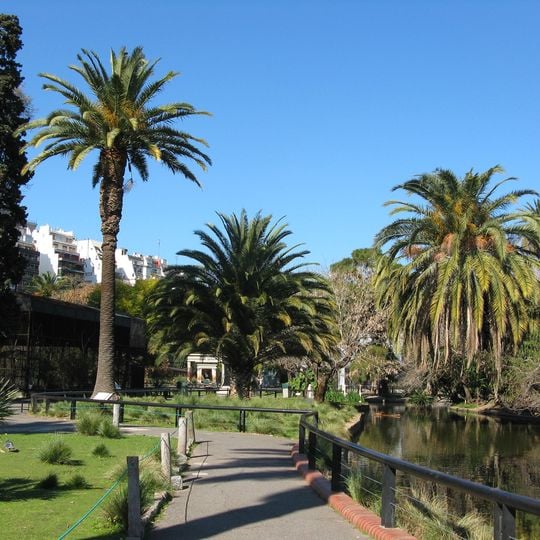
Buenos Aires Eco-Park covers 16.7 hectares in Palermo, next to the Carlos Thays Botanical Garden and Tres de Febrero Park. It holds 42 historic buildings in varied styles, three lakes, nine bridges and 27 sculptures. A paved walkway with a low black metal railing runs beside dark water, with a palm tree and grassy area on one side.
The zoo opened on 30 October 1888 with Eduardo Ladislao Holmberg as director, on land cleared, filled and separated from the railway. Holmberg housed each species in a building echoing its origin, from a Gothic bear pavilion (1897) to a Hindu temple for elephants. In 2016 the city closed the zoo and Law 5752 turned the grounds into an eco-park.
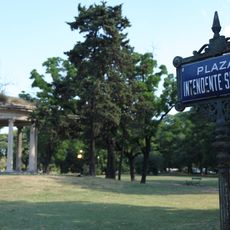
The grounds include architectural elements from different traditions, such as Moorish arches, Indian pavilions, and Greek columns, that once marked exhibition zones. These structures still shape the landscape and give the site an international, eclectic character.
The grounds adjoin the Carlos Thays Botanical Garden and Tres de Febrero Park in Palermo, with three lakes and nine bridges inside. Since 17 June 2026 entry is charged to foreign visitors and non-residents of the city, while porteños, retired people over 65, children under 12 and holders of a CUD certificate enter free.
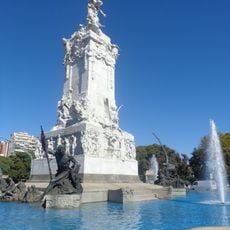
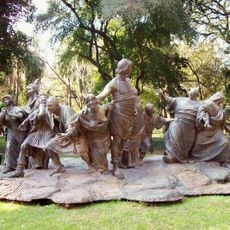
Native plant species grow alongside restored sculptures by Argentine artist Lola Mora, dating from the early 20th century. This combination of natural habitat and artistic heritage is rare among parks of this type.
The community of curious travelers
AroundUs brings together thousands of curated places, local tips, and hidden gems, enriched daily by 92,596 contributors worldwide.