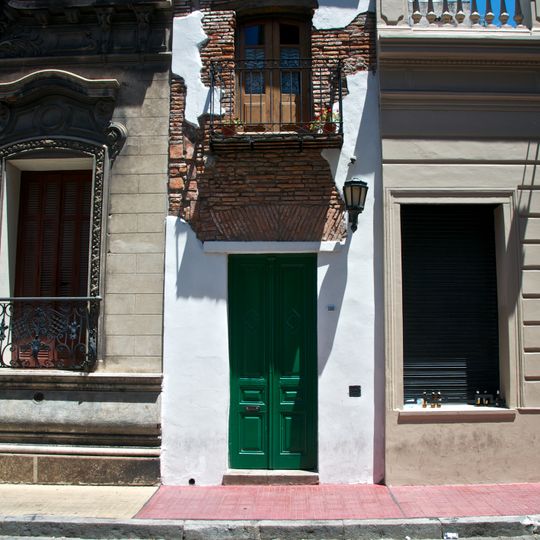
La casa mínima, Narrow colonial house in San Telmo, Buenos Aires, Argentina.
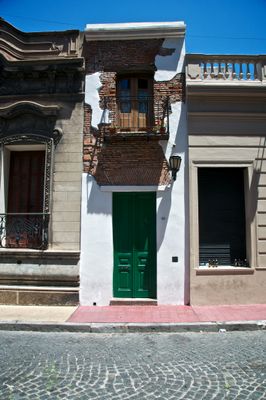
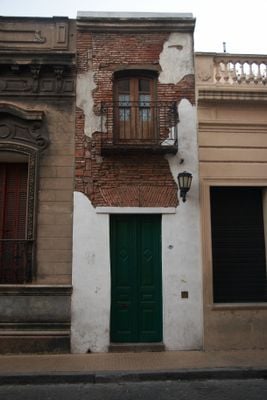
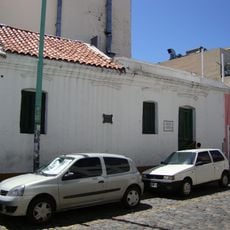
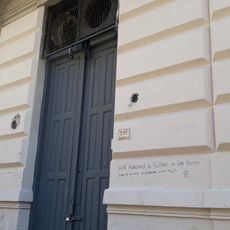
La Casa Mínima is a narrow residential building in San Telmo that measures only 2.5 meters wide while stretching about 13 meters deep into the block. A green wooden door and small balcony mark the street-facing entrance.
The 1813 legend that a freed slave of Urquiza received the house is disputed: slavery was only abolished in 1853. Architect José María Peña, director of the Museo de la Ciudad, found in an 1860 cadastre that the lot measured 16 metres by 17; he attributed the present width to later subdivisions. In the 1990s the property was bought by the director of El Zanjón Granados.
Stories passed down in the neighborhood connect this house to the life of a freed slave, shaping how locals understand this small place. The building has become part of San Telmo's identity as a reminder of the area's diverse past.
The house stands on Pasaje San Lorenzo, a narrow pedestrian lane in San Telmo, and is viewed from the street; the green door and the plaque reading 380 are the markers to look for. The 1990s owner also directed El Zanjón Granados, the excavated tunnel system under the same block, which can be visited separately.
The house keeps its walls of baked clay, and above the cornice plants grow where the old, peeling material has fallen away, exposing the foundations. The poet Baldomero Fernández Moreno described the facade with its green double door, iron lock and latch, and the number set high "like a flower in a lapel".
The community of curious travelers
AroundUs brings together thousands of curated places, local tips, and hidden gems, enriched daily by 94,025 contributors worldwide.