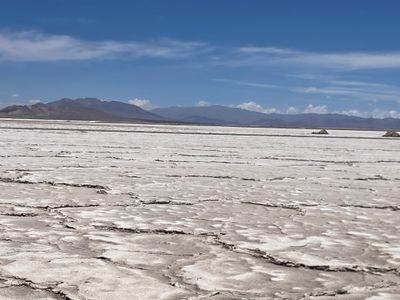
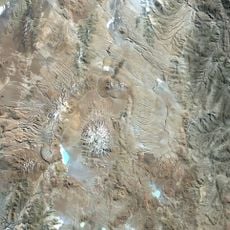
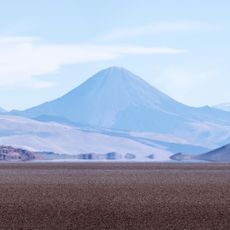
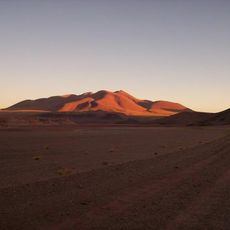
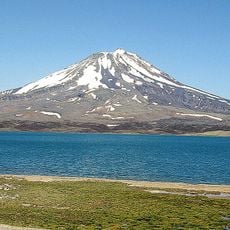
Salar del Hombre Muerto, Salt pan in Catamarca Province, Argentina.
Salar del Hombre Muerto is a vast salt flat in northwestern Catamarca that sits high in the mountains and stretches far across the landscape. The ground is covered in white salt deposits, with a few scattered ponds and water sources dotting the otherwise barren terrain.
Long ago, this area was covered by a large lake that gradually transformed into salt flats over many thousands of years. As the water slowly evaporated and geological processes continued, the white salt deposits formed and scattered water bodies remained.
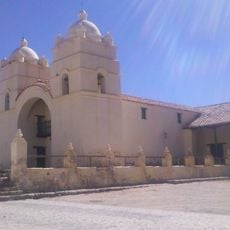
The name means "Salt Pan of the Dead Man". Obsidian from the salar has been found in Holocene archaeological sites at Antofagasta de la Sierra, showing the plain was a stone source for early groups. The Incahuasi gold mine on the Incahuasi peninsula is linked to two towns founded in the 18th century, Nuestra Señora de Loreto de Ingaguasi and Agua Salada.
You need a four-wheel drive vehicle to reach this place, as the roads are unpaved and run through remote mountain terrain. Bring plenty of water and supplies with you, since there are few facilities once you arrive.
The salt pan is split by the Farallón Catal, a 72 km² central island, with the anvil-shaped Península de Hombre Muerto jutting from the southeast and the narrow Tincalayu peninsula to the north. The eastern half, Salar de Vida, lies under debris, while the western half shows the polygonal evaporite crust seen from the shore.
The community of curious travelers
AroundUs brings together thousands of curated places, local tips, and hidden gems, enriched daily by 92,752 contributors worldwide.