Los Cardones National Park, National park in Salta Province, Argentina
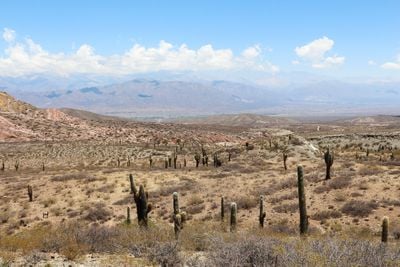
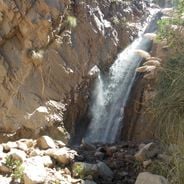
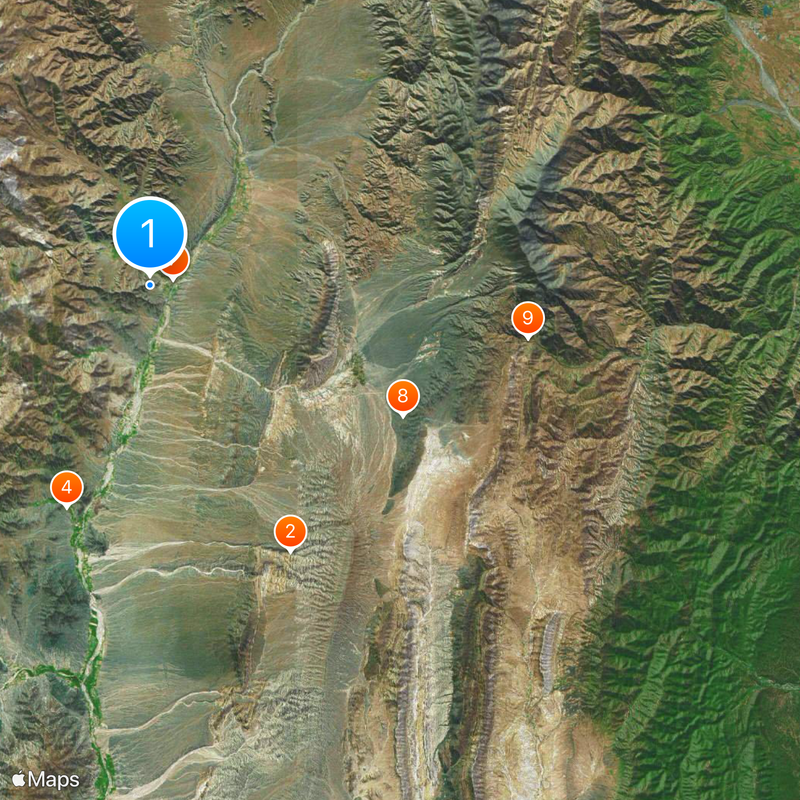
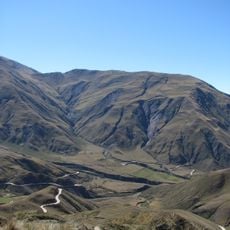
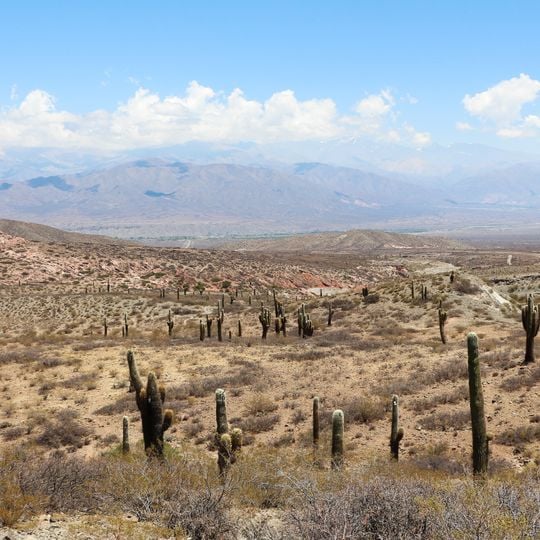
Los Cardones National Park is a mountain reserve of about 64,000 hectares with elevations ranging from 2,600 to over 5,200 meters, composed of dry terrain with sparse vegetation. The landscape includes rocky slopes, open plateaus, and narrow valleys that run south to north through the region.
The reserve was established in 1996 to protect a landscape containing rock paintings from pre-Hispanic peoples. Fossilized dinosaur footprints from the age of dinosaurs have also been discovered in the mountain formations.
Shepherds move through these mountains following routes passed down through generations, grazing their herds on designated lands that shape the landscape. This pastoral tradition remains visible in how the valleys are used and inhabited today.
The main route passes through Provincial Route 33, which runs through the mountain region and has several stops for public buses. Visitors should wear sturdy footwear and be prepared for thinner air at higher elevations.
The park's dinosaur footprints, about 70 million years old, are studied by scientists, and rock paintings also survive in the protected area. The cardón cacti that name the park are Echinopsis atacamensis, called pasacana locally. Provincial Route 33 crosses the park for 38 km of asphalt along a perfectly straight stretch known as the Recta del Tin-Tin.
The community of curious travelers
AroundUs brings together thousands of curated places, local tips, and hidden gems, enriched daily by 92,765 contributors worldwide.