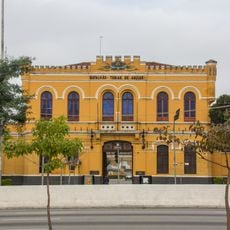
Museum of Sacred Art of São Paulo, Sacred art museum in Luz, São Paulo, Brazil
The Museum of Sacred Art of São Paulo occupies the left wing of the Luz Monastery and displays religious artworks from the sixteenth century onward. The collection combines pieces from both state and church holdings brought together decades ago.
The Luz Monastery was founded in 1774 by Frei Galvão as a retreat for cloistered nuns, and he worked as its bricklayer and supervisor until partial completion in 1788. The museum opened on 29 June 1970 after an agreement signed on 28 October 1969 merged the Archdiocese's Curia Museum collection with state-owned sacred art. Frei Galvão, Brazil's first saint, is buried there.
The museum holds about 4,000 pieces, of which 800 are on display. Its Nativity Scene Museum keeps 120 crèches, including an 18th-century Neapolitan set of 1,620 figures, one of the three most important of its kind. A numismatic collection of 9,000 colonial coins and medals and a library of rare 16th-century liturgical books are also kept here.
The museum occupies the ground floor of the left wing of the Luz Monastery and also includes the Casa-Forte, the former cemetery of the nuns. The cloistered section where the conceptionist sisters still live is closed to the public. The entrance is on Avenida Tiradentes in the Luz neighborhood, near the Tiradentes metro station.
The monastery building is one of the few eighteenth-century colonial structures in the city that still retains its original materials and architectural details. This makes it a rare example of how early São Paulo looked and was built.
The community of curious travelers
AroundUs brings together thousands of curated places, local tips, and hidden gems, enriched daily by 92,784 contributors worldwide.