Corcovado, Natural summit in Alto da Boa Vista, Brazil
Corcovado is a natural summit in Alto da Boa Vista, Rio de Janeiro, Brazil, rising 710 meters above the city. The eastern side shows steep granite cliffs while the western slopes descend more gently and are covered in dense Atlantic rainforest.
A road to the summit was built in 1824, later reserved for a tourist transport company. The Corcovado rack railway from Cosme Velho was inaugurated on 9 October 1884 by Emperor Pedro II of Brazil; at 3,824 metres it was the country's first line built solely for tourism and its first electrified line in 1910. For four years it carried materials for the Christ the Redeemer statue, inaugurated in 1931.
The 38-metre Christ the Redeemer, built between 1922 and 1931, stands on the summit and is the mountain's defining symbol. The name Corcovado means "hunchback" in Portuguese, after the peak's curved profile. Antônio Carlos Jobim's 1960 bossa nova song "Corcovado" takes the hill as its subject, and the peak appears in works by Ben Harper and Nino Ferrer.
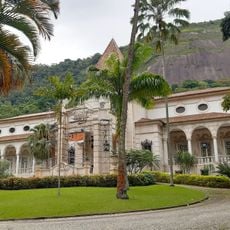
Visitors reach the summit through the rack railway from Cosme Velho station or by hiking trails starting at Parque Lage. Early morning hours often provide clearer views and fewer crowds at the viewpoint.
The south face of Corcovado had 54 climbing routes recorded in 1992, and the easiest approach starts from Parque Lage. The granite dome is claimed to be the highest formation of its kind in Brazil, with Pedra Agulha near Pancas in Espírito Santo second. The 1960 bossa nova song "Corcovado" by Antônio Carlos Jobim takes the hill as its subject.
The community of curious travelers
AroundUs brings together thousands of curated places, local tips, and hidden gems, enriched daily by 92,618 contributors worldwide.