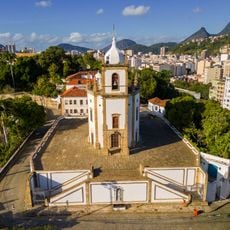
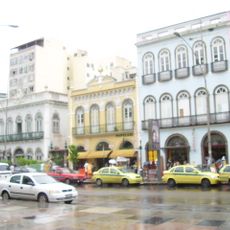
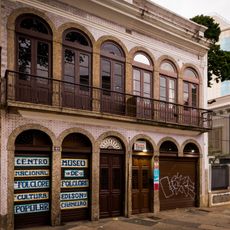
Museum of the Republic, National history museum in Flamengo district, Rio de Janeiro, Brazil.
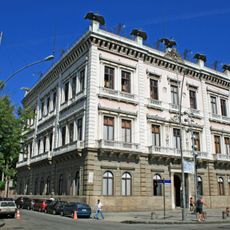
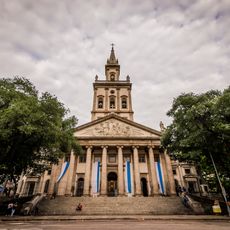
The Museum of the Republic occupies the Palácio do Catete, a palace built for the family of the Barão de Nova Friburgo that later became the seat of the Brazilian presidency. Its salons display photographs, documents, furniture and art from the 19th and 20th centuries, and the museum holds some 9,557 items grouped into 74 collections named after republican figures.
The Catete Palace became the seat of Brazil's presidency in 1897 and remained so until 1960, when Decree 47,883 of 8 March created the Division of Republican History within the National Historical Museum. The museum itself was founded on 15 November 1960, the date commemorating the proclamation of the republic. It became administratively independent in July 1983, closed for restoration from 1984 to 1989, and reopened on 15 November 1989, the centenary of the republic.
The name reflects Brazil's transition to a republic in 1889, making the building a symbol of that political shift. You can see how the rooms reflect the way power and governance were understood at that time.
The museum occupies the Palácio do Catete, whose gardens open to the public and connect toward Flamengo. The building closed for restoration of its decorative and architectural elements between 1984 and 1989, reopening on 15 November 1989. Since 2005 the museum also manages the Palácio Rio Negro in Petrópolis, the former summer residence of presidents.
The museum holds about 9,557 items in 74 collections, most named after figures of the republican era; 29 refer to former presidents. The largest is the Pereira Passos Collection, with 1,457 objects donated by the family of the former Rio mayor. The Getúlio Vargas Collection of 1,082 items keeps the revolver and pyjamas he used on the night of his suicide, 24 August 1954.
The community of curious travelers
AroundUs brings together thousands of curated places, local tips, and hidden gems, enriched daily by 92,783 contributors worldwide.