Palácio Rio Negro, Eclectic architectural palace in Rio de Janeiro, Brazil.
Palácio Rio Negro is an eclectic architectural palace in Rio de Janeiro that combines design elements from different periods. Its rooms feature ornate woodwork, high ceilings, large windows, and spacious layouts showcasing various artistic influences.
Manoel Gomes de Carvalho, Baron of Rio Negro, bought the lot from the Klippel family heirs in 1889 and had Italian architect Antonio Jannuzzi design his summer palace, completed that same year. In February 1896 the palace was sold to the State of Rio de Janeiro as the governor's residence while Petrópolis was the state capital. In 1903 it passed to the federal government and became the presidents' summer residence; sixteen presidents have used it, and Getúlio Vargas spent every summer there during his 18 years in office.
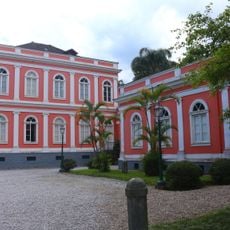
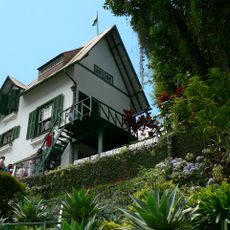
The palace's name comes from Manoel Gomes de Carvalho, Baron of Rio Negro, who built it as a summer residence. It was here that President Hermes da Fonseca married Nair de Teffé in 1914; she published caricatures under the pseudonym Rian. Getúlio Vargas spent every summer of his 18 years in office at the palace. The Brazilian Expeditionary Force Museum now occupies part of the grounds.
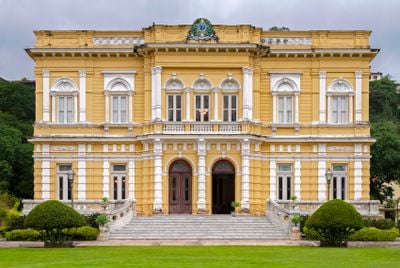
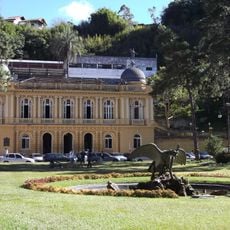
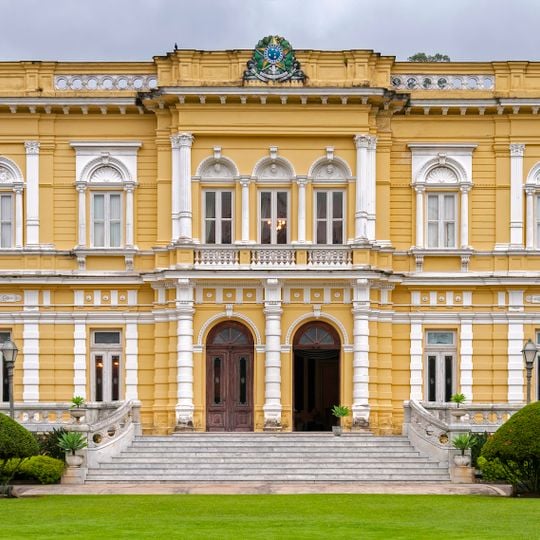
The palace stands in Petrópolis, in the mountainous part of Rio de Janeiro state, and is rarely used today, so visits depend on the presidential agenda. The Brazilian Expeditionary Force Museum occupies part of the grounds. The gray stone staircase with its curved balustrade leads up to the arched entrance doors.
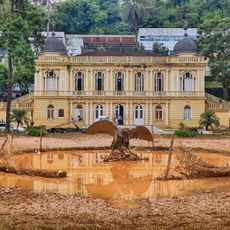
The palace was designed by Italian architect Antonio Jannuzzi, a friend of Baron Rio Negro, and finished in 1889, the year of the Proclamation of the Republic. Its yellow facade with white banding and a crest on the roofline faces a lawn above a curved gray stone staircase. The Brazilian Expeditionary Force Museum now occupies part of the grounds.
The community of curious travelers
AroundUs brings together thousands of curated places, local tips, and hidden gems, enriched daily by 93,806 contributors worldwide.