Imperial Museum of Brazil, National museum in Petrópolis, Brazil.
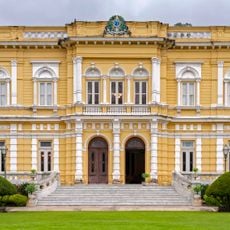
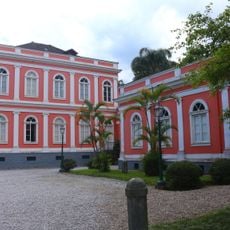
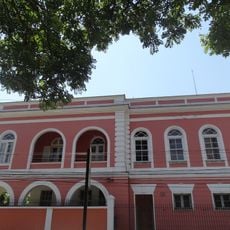
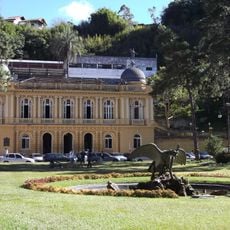
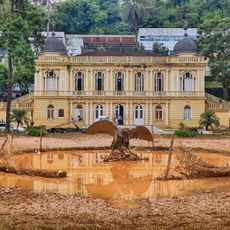
The Imperial Museum of Brazil occupies the neoclassical Petrópolis Imperial Palace, built from 1845 to 1862 with pale pink walls, white trim and a granite portico added by Cristoforo Bonini. Its left pavilion has a triangular pediment with a carved coat of arms above an arched entrance; a long right wing carries tall arched windows over square ones.
Pedro I bought the Córrego Seco estate in 1830 hoping to build a Palace of Concordia there; his son Pedro II inherited it and began the neoclassical palace in 1845, completing it in 1862. Pedro II signed the decree of 16 March 1843 that founded Petrópolis so the building could rise, and German immigrants under engineer Julius Friedrich Koeler built it with the emperor's personal funds. After the republic was proclaimed on 15 November 1889 the family was exiled, and the palace later held schools before Getúlio Vargas created the museum in 1940.
The museum displays objects from the daily life and ceremonies of the imperial court, showing how the royal family lived and exercised power here. The rooms are furnished with original furniture, paintings, and personal objects that convey a sense of their lifestyle.
The museum is located in downtown Petrópolis and is easy to reach on foot. It is open to visitors most days of the week, with early mornings offering a less crowded experience.
The building preserves one of South America's largest collections of crown insignia and royal regalia. These pieces offer insight into the ceremonial power and personal style of the imperial rulers.
The community of curious travelers
AroundUs brings together thousands of curated places, local tips, and hidden gems, enriched daily by 94,502 contributors worldwide.