Palácio Quitandinha, Convention center and tourist attraction in Petrópolis, Brazil.
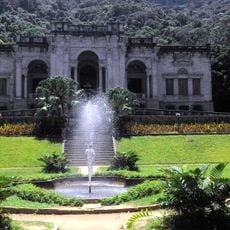
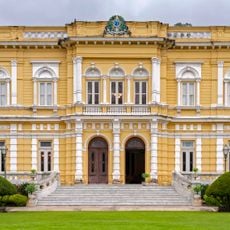
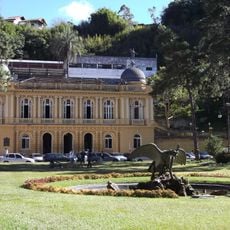
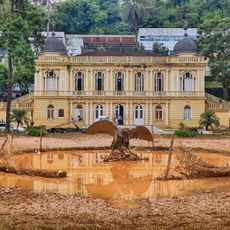
The Palácio Quitandinha sits at the foot of mountains and combines a Norman-French exterior with Art Deco interiors across six floors and roughly 50,000 square meters. The building clearly displays both architectural styles in its structure and rooms.
Joaquim Rolla built the palace between 1941 and 1946 to designs by Italian architect Luis Fossatti, on land owned by his brother-in-law Antonio Faustino, as Latin America's largest casino hotel. Brazil outlawed gambling on 30 May 1946, closing the casino after about two years. The hotel shut in 1962 and Rolla sold the rooms as private residences from 1963; SESC took over the ground-floor halls in 2007.
The palace displays decorative elements by Dorothy Draper that incorporate Brazilian maritime and forest themes throughout the interior. These details appear in hallways and rooms, reflecting the country's natural character.
The ground-floor social and historical areas belong to SESC Rio, which took them over in 2007 and opened the Centro Cultural Quitandinha there in 2023. The upper apartments are private homes with private access, so visitors stay in the ground-floor halls and cultural centre. The building stands in the Quitandinha neighbourhood, in the southern zone of Petrópolis.
The artificial lake in front of the palace mirrors the geographical shape of Brazil and holds sand brought from Copacabana Beach. This carefully planned design links the building to the country's landscape and history.
The community of curious travelers
AroundUs brings together thousands of curated places, local tips, and hidden gems, enriched daily by 92,629 contributors worldwide.