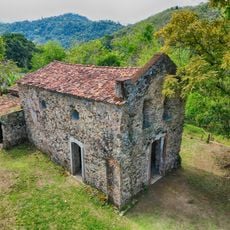
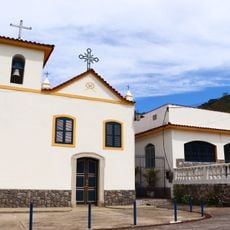
Caminho do Proença, Historical trail in Magé, Brazil.
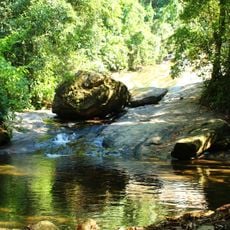
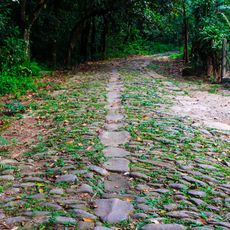
Caminho do Proença is a colonial route that began at the Estrela port on Guanabara Bay and followed the Inhomirim River before climbing the Serra da Estrela to Itamaraty. From there it followed the Piabanha River through Correias and Itaipava, then turned toward Santana de Cebolas and joined the Caminho Novo at Santo Antônio da Encruzilhada. Some stretches still show irregular stones from the 1802 paving ordered by the Portuguese Crown.
Between 1722 and 1725, sergeant-major Bernardo Soares de Proença, a landowner in Suruí, opened this variant of the Caminho Novo, avoiding the steep climb through Xerém by following the Inhomirim river. It cut the Rio de Janeiro to Vila Rica journey from fourteen to ten days. In 1802 the Portuguese Crown had it paved with irregular stones, traces of which survive.
The route was a variant of the Caminho Novo, and in the 18th century it carried merchants, enslaved people, goods and gold from Minas Gerais down to the port of Estrela on Guanabara Bay. Muleteers and travellers soon preferred it over the older, steeper ascent through Xerém. Its existence also led to the founding of Petrópolis: Dom Pedro I passed this way in March 1822 and later bought the Córrego Seco estate.
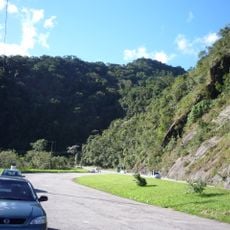
Entry to the trail begins from Magé and follows a mountain path that requires sturdy footwear and some physical fitness. Visitors should start early and be prepared for weather changes at higher elevations.
The original pavement from 1802 with its irregular stones is still visible in several sections and shows the traditional craftsmanship of colonial times. This original surface is one of the few surviving examples of road construction from that era in the region.
The community of curious travelers
AroundUs brings together thousands of curated places, local tips, and hidden gems, enriched daily by 94,099 contributors worldwide.