Jacarenema Ecological Reserve, Municipal nature reserve in Vila Velha, Brazil.
The Parque Natural Municipal de Jacarenema is a nature reserve in Vila Velha that combines mangrove forest areas, river estuary habitats, and Atlantic Forest vegetation across roughly 307 hectares. The site encompasses different ecosystems along the coast, with varied terrain including sandbars and adjacent woodlands.
The reserve was created by state law 5.427 of 30 July 1997, proposed by deputy Claudio Vereza and signed by governor Vitor Buaiz. The 1989 state constitution had already listed Jacarenema among areas to be protected. A municipal decree, 056/83, had earlier defined the reserve, and later municipal laws created the Parque Natural Municipal and authorised land expropriation.
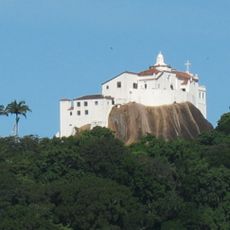
The name Jacarenema comes from Tupi and was given by the Temiminó peoples: it refers to a foul-smelling alligator, not a bird. In the 19th century the naturalist Prince Maximilian of Wied-Neuwied recorded the area as virgin forest stretching toward Vila Velha. The reserve also holds ruins of Jesuit buildings.
Reach the reserve by crossing the 1896 Madalena bridge from Barra do Jucu, or by walking south along Itaparica beach from the north. The main access is the Balneário da Baía, near the Ponte da Madalena. Fishing, swimming and boating are practised in the reserve, and the Jucu River carries wastewater and urban garbage toward the mangroves at its mouth.
The mangrove system displays an unusual plant distribution, where one tree species makes up about 42 percent of the total vegetation. This unequal composition makes the area of particular interest to researchers studying coastal ecosystems.
The community of curious travelers
AroundUs brings together thousands of curated places, local tips, and hidden gems, enriched daily by 92,869 contributors worldwide.