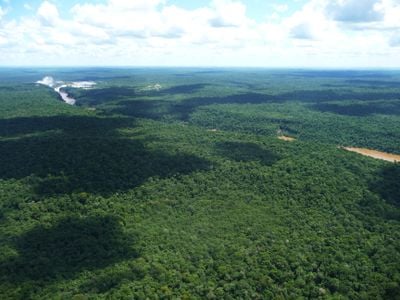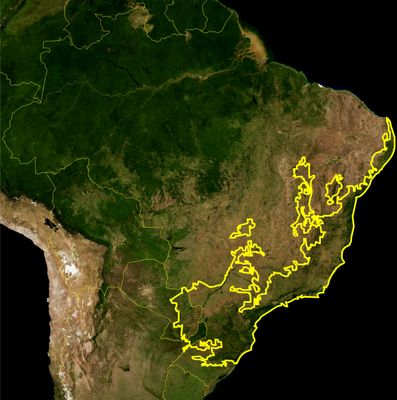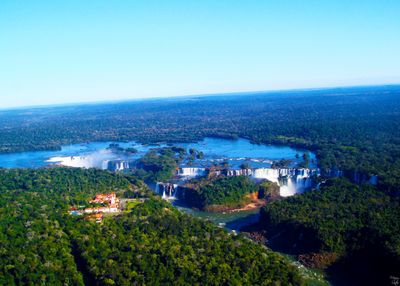
Atlantic Forest, Tropical forest biome along Brazil's Atlantic coast, eastern Paraguay and Misiones, Argentina
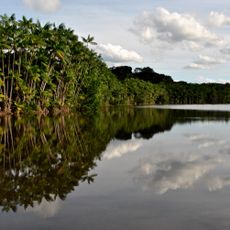
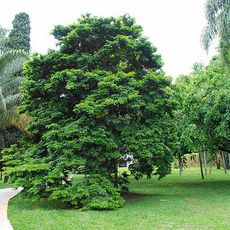
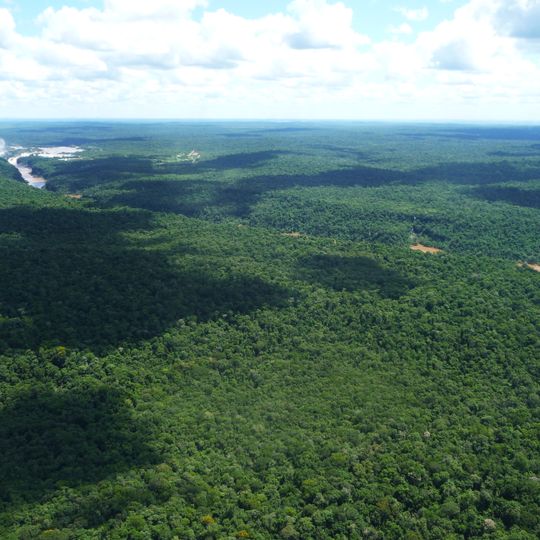
The Atlantic Forest is a tropical rainforest system that stretches roughly 3000 kilometers along the Brazilian coastline, passing through several climate zones. The region spans from northeastern states down to the southern state of Rio Grande do Sul, covering varying elevations from sea level to mountain ranges.
During the 1500s, the forest covered roughly 1.5 million square kilometers and formed the second largest rainforest system on Earth. Over the following centuries, colonial expansion led to the gradual reduction of this original habitat.
The name Mata Atlântica was used by Wappäus in 1884, referring to the "virgin forest zone of the Atlantic coast"; earlier, Martius in 1824 called it "Matto-virgem do litoral". The Tupi-Guarani word Mussununga names the soft, wet white-sand forests of southern Bahia and northern Espírito Santo. Portuguese colonists used Indigenous labor and knowledge to extract Paubrasilia echinata for red dye.
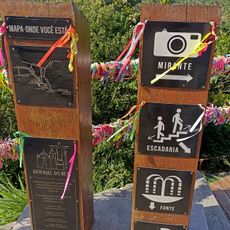
Many protected areas within the region offer trails and visitor centers accessible from cities like Rio de Janeiro and São Paulo. Guided walks with local rangers help with navigation through dense forest sections and provide insight into the wildlife and plant life.
This forest holds around 264 mammal species and roughly 23,000 plant species, with many found nowhere else. Nearly half of its vascular plants grow only here, making this habitat a center of biological diversity.
The community of curious travelers
AroundUs brings together thousands of curated places, local tips, and hidden gems, enriched daily by 92,297 contributors worldwide.