Archbishop's Palace of Salvador, Catholic palace and cultural center in Pelourinho district, Salvador, Brazil
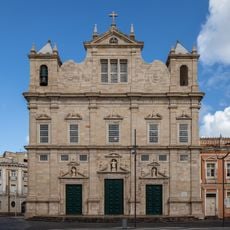
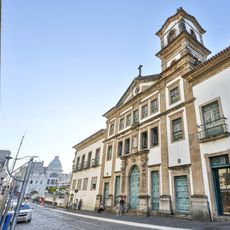
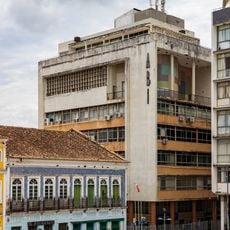
The Archbishop's Palace is a three-story building with basement in the historic city center, marked by a Baroque stone portal with a carved coat of arms. Inside, a central courtyard brings natural light and air through all the levels.
Queen Regent authorized a residence for the archbishop on 13 March 1705, first planned near the Terreiro de Jesus. In 1707 the site beside the old Sé Cathedral was chosen, on the ground of a hermitage of the Brotherhood of Saint Peter of the Clergy, and the building was finished in 1715. IPHAN listed it in 1938 and transferred ownership to the Archdiocese of São Salvador da Bahia in 2011.
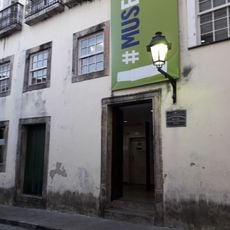
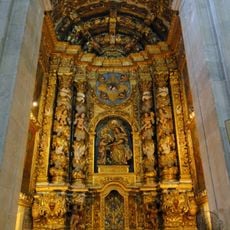
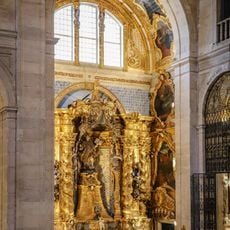
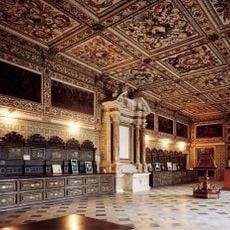
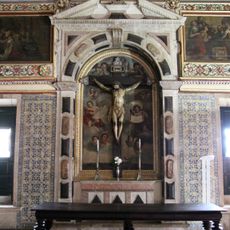
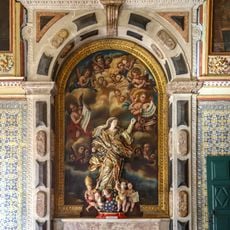
The Cultural Center of the Palácio da Sé opened in 2020 on the first floor, with a permanent exhibit titled "The Church and the Formation of Brazil" drawn from artifacts owned by the Archdiocese of São Salvador. Remnants of the former Sé Cathedral, demolished in 1933, form an important part of the collection. The first floor also houses the Reitor Eugênio Veiga Conservation and Restoration Laboratory, and the second floor holds further archdiocesan artifacts.
The Cultural Center of the Palácio da Sé occupies only part of the building; the rest remains in use by the Archdiocese for administrative and religious purposes. The permanent exhibit "The Church and the Formation of Brazil" and the Reitor Eugênio Veiga conservation laboratory are on the first floor, with further archdiocesan artifacts on the second. The palace faces the Praça da Sé, on the site of the cathedral demolished in 1933.
The central courtyard was designed following Italian style and was an innovative solution for ventilation and lighting of inner rooms. This design approach was uncommon in colonial buildings of that era.
The community of curious travelers
AroundUs brings together thousands of curated places, local tips, and hidden gems, enriched daily by 92,850 contributors worldwide.