Fort of the Holy Cross, Fortress ruins in Maragogipe, Bahia, Brazil
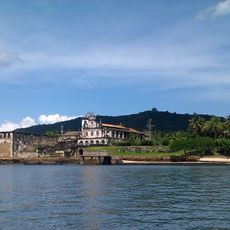
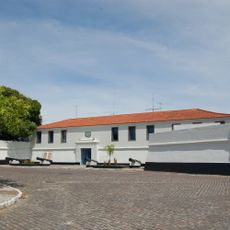
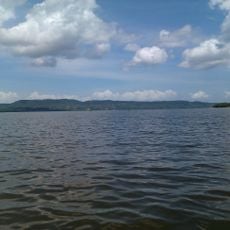
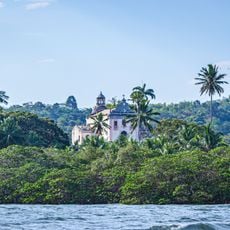
The Fort of the Holy Cross stands on the right bank of the mouth of the Paraguaçu River in Maragogipe. Its plan is an irregular hexagon with five salient angles and one reentrant, and it was flanked by water on three of its six sides. It was built of stone masonry with brick sentry boxes at the vertices, and a single-storey building on the entry side housed the command house, troop barracks and storerooms.
A 1659 document records three forts in the area, the most important being the Forte Real de Paraguaçu, also called Forte de Santa Cruz do Paraguaçu; scholars disagree on who built it. Its present form probably dates from the early 18th century, raised over a structure from the first half of the 17th century. During the Dutch invasions of Brazil (1630–1654) it crossed fire with the Fortim da Forca on the opposite bank to block access to the Iguape sugar mills and the towns of Maragogipe and Cachoeira. Decommissioned after 1816, it was restored in 1762 and again in 1772 under engineer José António Caldas.
The fort sits at the river's mouth where it served as a checkpoint for controlling inland movement and commerce during colonial times. Its location reflects how Portuguese military strategies focused on protecting vital water routes and trade access to the region.
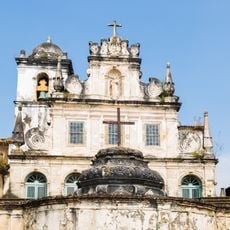
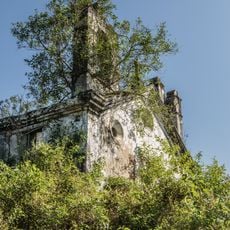
The ruins stand on the right bank at the mouth of the Paraguaçu River, reached from Maragogipe; the site is federal property listed by IPHAN since 1938. Only the stone walls of the terreplein, a circular domed sentry box and an old cannon survive, so footing is uneven. A 1959 restoration project was never carried out.
The fort's irregular hexagonal plan, with five salient angles and one re-entrant, was drawn by engineer José António Caldas around 1764; his sketch is held at the Arquivo Histórico Ultramarino in Lisbon. A circular sentry box with a dome and an old cannon survive among the stone walls of the terreplein. In 1859 the fortlet was noted for having stopped the Portuguese from retaking a ship seized by the cachoeiranos during the Independence struggles.
The community of curious travelers
AroundUs brings together thousands of curated places, local tips, and hidden gems, enriched daily by 92,818 contributors worldwide.