Parish Church of Santiago, Iguape, church building in Iguape, Cachoeira, Brazil
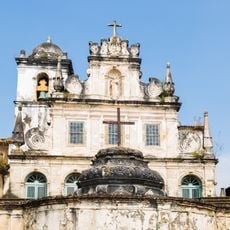
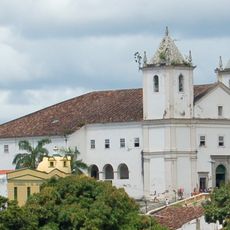
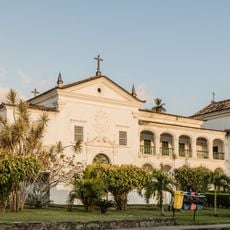
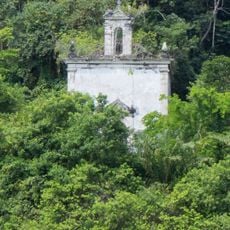
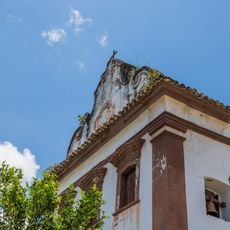
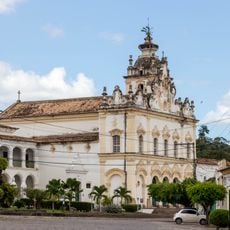
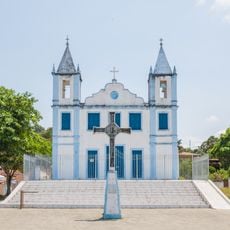
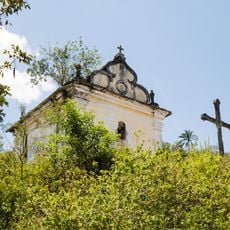
The Parish Church of Santiago is a church building in Iguape near Cachoeira, constructed from brick and sandstone and combining Baroque and Rococo elements. It features a single nave, two rounded towers with ceramic tile covering on the facade, and an interior that is relatively plain with Portuguese tiles decorating the main altar.
The Jesuits founded the Parish of Santiago do Iguape in the 16th century, the oldest in the Paraguaçu, and the primitive chapel stood on land of Antônio Lopes Ulhoa, a Knight of the Order of Santiago; it received canonical sanction as matriz in 1608. After the 1783 expulsion of the Jesuits the complex fell into ruin, and the present structure was begun in the first half of the 19th century, dragged on to the century's end and was never completed.
The church is dedicated to Saint James, whose insignia—a staff, book and gourd—appears in a medallion above the main door. Each year the Knights of Santiago de Compostela visit the church, continuing a link with the military order to which the original landowner belonged.
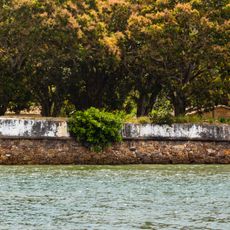
The entrance and facade face the Iguape inlet of the Paraguaçu River, while the rear faces the community and has no door, so visitors arrive from the water side. The east, west and rear facades were never finished and carry no ornamentation. Inside, the single nave, side tribunes and sacristy are plain; the blue-and-white Portuguese tiles in the chancel are the main feature to look for.
The towers are covered with pieces of ceramic tiles and glazed pottery that builders added late in the construction process, giving the church a colorful and textured appearance. This detail makes the facade particularly noticeable among other buildings in the region.
The community of curious travelers
AroundUs brings together thousands of curated places, local tips, and hidden gems, enriched daily by 94,737 contributors worldwide.