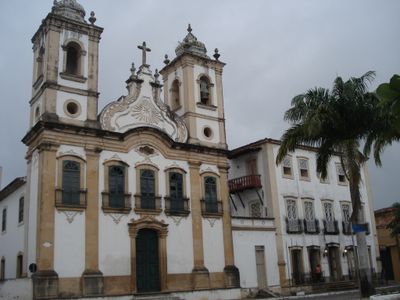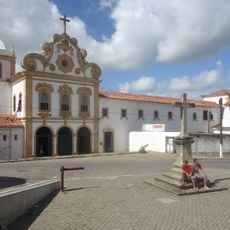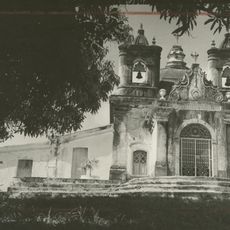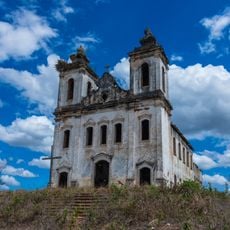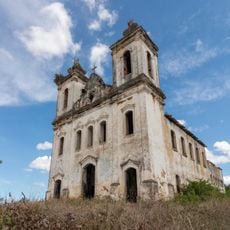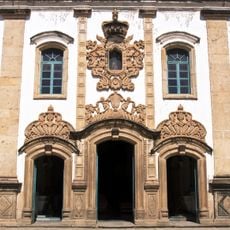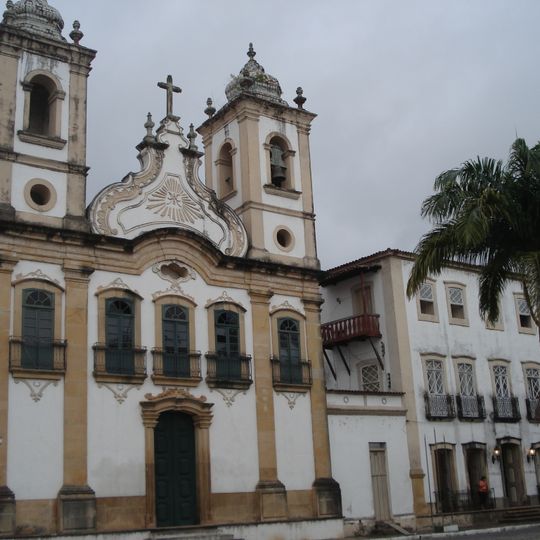
Church of Our Lady of Chains, Colonial church building in Penedo, Brazil
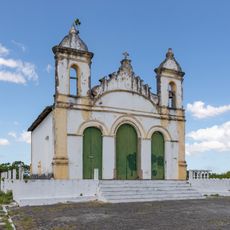
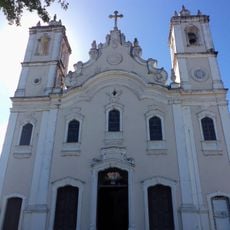
The Church of Our Lady of Chains is a Catholic church in Penedo, Alagoas, built from 1764 to around 1790. Its decoration mixes baroque, rococo and neoclassical elements, with Portuguese imperial azulejo tiles and English ceramic flooring. The carved main altar, the chancel arch, the valances and the pulpits stand out, and small Portuguese nativity-style statues complete the interior.
A small chapel stood on this site by the mid-1720s, built by residents of the left bank of the São Francisco River to ask protection from its currents; it later collapsed. The present church was begun in 1764 by captain-mor José Gonçalo Garcia Reis and finished around 1790 by captain André de Lemos Ribeiro, of the Lemos family. It is listed by IPHAN.
The name refers to Nossa Senhora da Corrente, a devotion absent from the Catholic liturgical calendar; one explanation ties it to benefactor Ana Felícia da Corrente, another to founder José Gonçalo Garcia Reis, who reached Penedo carrying a piece of the chain of his Portuguese prison. Small Portuguese nativity-style statues are part of the ensemble.
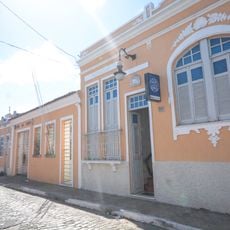
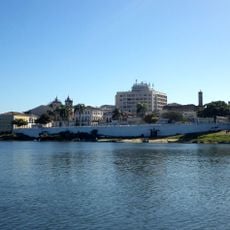
The church stands in Penedo's historic centre, on the left bank of the São Francisco River. The secret passage used during the abolitionist movement was on the right side of the main altar for those entering, and slaves stayed there three to four days before fleeing toward the Palmares quilombo in the Serra da Barriga, today União dos Palmares.
A version widespread in Penedo holds that the church had a secret compartment beside the altar where fugitive slaves were hidden for three or four days, until they received a forged manumission letter and could flee toward the quilombo dos Palmares, in the Serra da Barriga.
The community of curious travelers
AroundUs brings together thousands of curated places, local tips, and hidden gems, enriched daily by 94,059 contributors worldwide.