Chest opened
+${chestReward.xp} XP
Explorer
NOUVEAU ×${chestReward.collectible.quantity}
tapez pour fermer

See the monuments around you in AR Open chests in the app

Around Us is built for your phone — point your camera at the streets and discover the monuments and places around you in augmented reality. Around Us is built for your phone — chests unlock when you walk, explore and capture nearby places.

•

Enable Location

We need your location to show you interesting places around you

Discover nearby places

Find interesting locations and hidden gems around you

Precise directions

Get accurate directions and distances to places

Your location is never shared with other users. It's only used when you tap the location button.

Fairy circle

Log in to your account

Start exploring — it's free

Trusted by 93,443 travelers worldwide

Continue with Google
Continue with Apple
or

We will send you a code to connect

By continuing, you accept our Terms and Conditions and our Privacy Policy

Check your inbox

We've sent a pincode in your inbox. Please enter the code below.

Fairy circle

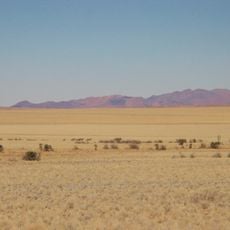
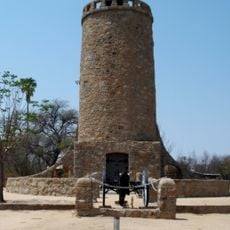
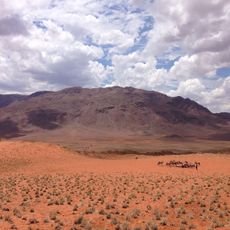
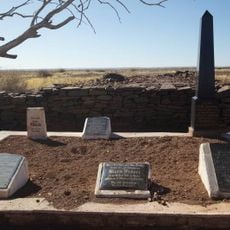
Fairy circle, Natural phenomenon in Namib Desert, Namibia.

Fairy circles are circular bare patches in arid Stipagrostis grasslands, 2 to 12 metres across, each edged by a ring of taller grass. They occur in a band about 160 km inland from Angola to South Africa's Northern Cape, and near Newman in Western Australia's Pilbara. The bare centres are reddish-orange sand; the surrounding grass forms a pale fringe.

Scientists first documented these formations in technical literature during the 1920s. Decades of research have since generated multiple theories about how these patterns emerge and persist in arid environments.

The circles are known as linyji in the Manyjilyjarra language and mingkirri in Warlpiri, spoken by Aboriginal peoples of the Pilbara in Western Australia, where similar formations were found in 2014. In Namibia the sand termite Psammotermes allocerus was recorded in 80 to 100 percent of the circles studied by Norbert Jürgens, who called the lush grass rims "luxury belts".

Viewing is most rewarding after heavy rainfall when the contrast between dry and wet zones appears strongest. Early morning visits offer cooler temperatures and better visibility for observing the full circular patterns across the landscape.

The circles were first noted in technical literature in the 1920s, and study intensified in the last quarter of the 20th century. In 2014 similar rings were found outside Africa, 15 km from Newman in the Pilbara, Western Australia, where Martu and Warlpiri peoples call them linyji and mingkirri.

The community of curious travelers

AroundUs brings together thousands of curated places, local tips, and hidden gems, enriched daily by 93,443 contributors worldwide.

Start exploring
GPS coordinates
-24.95000,15.93000
Latest update
October 26, 2026 09:35
Reviews
Share your experience

No review yet

Discussions
Start a discussion...

No discussion yet

« Fairy circle - Natural phenomenon in Namib Desert, Namibia » is provided by Around Us (aroundus.com). Images and texts are derived from Wikimedia project under a Creative Commons license. You are allowed to copy, distribute, and modify copies of this page, under the conditions set by the license, as long as this note is clearly visible.

Discover hidden gems everywhere you go!

From secret cafés to breathtaking viewpoints, skip the crowded tourist spots and find places that match your style. Our app makes it easy with voice search, smart filtering, route optimization, and insider tips from travelers worldwide. Download now for the complete mobile experience.

Around Us App Screenshot
❝

A unique approach to discovering new places❞

— Le Figaro

❝

All the places worth exploring❞

— France Info

❝

A tailor-made excursion in just a few clicks❞

— 20 Minutes

Around Us
Travel Guide & Maps
Download

Send to your phone

QR Code
1

Open the camera app on your mobile.

2

Point at the QR code with your camera. A notification will appear.

3

Tap the notification to open the link.