Namib-Naukluft National Park, National park in western Namibia.
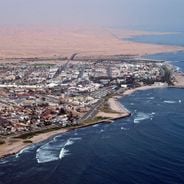
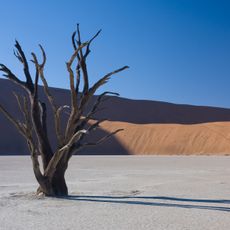
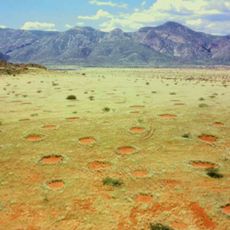
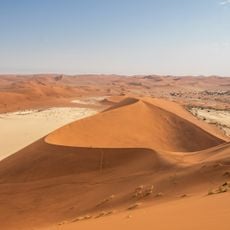
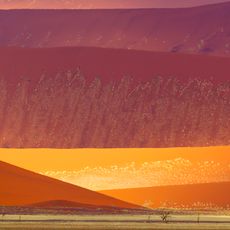
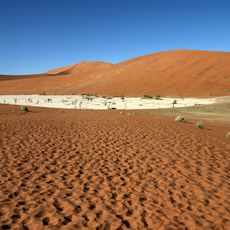
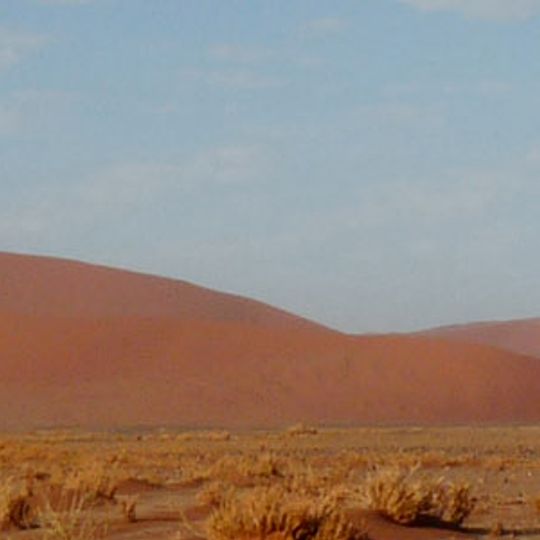
Namib-Naukluft National Park sits in western Namibia and stretches from the Atlantic coast through orange-red sand dunes to the Great Escarpment inland. It includes dry river valleys, mountain plateaus, and mile after mile of sand that glows in shifting shades of red at sunrise.
The park began in 1907, when the German colonial administration proclaimed three game reserves in German South West Africa and named this one Game Reserve No. 3. Its northern border ran five kilometres south of the Swakop River and its southern border ten kilometres south of the Kuiseb. After World War I the South African administration confirmed the proclamation; Sandwich Harbour was added in 1941 and the southern border extended in 1962. In 1966 the reserve was deproclaimed and the Namib Desert Park established, and in 1979 the Naukluft Mountain Zebra Park and a 1,600-kilometre strip of the Atlantic were added.
The name Namib comes from a Nama word meaning "open space", and the desert gave Namibia its name, "land of open spaces". The Naukluft range, added to the park in 1979, was bought up from 14 commercial farms to protect the Hartmann mountain zebra. Gemsbok, springbok and bat-eared foxes live in the hyper-arid sand, where fog off the Atlantic brings more moisture than the 106 mm of annual rain.
Roads to the main areas are paved, with the Sesriem gate providing the main entry point. Early morning hours offer cooler temperatures and better light for photographing the dune formations, so the gate opens before sunrise.
Some of the tallest sand dunes on Earth rise more than 300 meters (about 1000 feet) here and form a rolling relief of hardened and loose sand layers. The desert itself is considered the oldest on the planet, having remained dry for around 80 million years.
The community of curious travelers
AroundUs brings together thousands of curated places, local tips, and hidden gems, enriched daily by 92,922 contributors worldwide.