Huguenot Monument, Memorial site in Franschhoek, South Africa
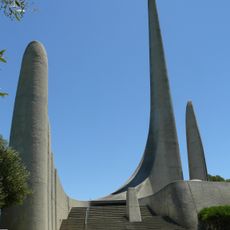
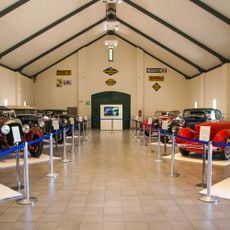
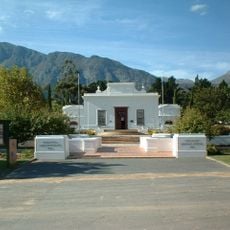
The Huguenot Monument in Franschhoek consists of three high arches symbolising the Holy Trinity, topped by the sun of righteousness and the Huguenot cross. In front stands a female figure by Coert Steynberg, holding a Bible and a broken chain, set on a globe bearing symbols of faith, arts, agriculture and industry. A circular pond reflects the colonnade behind, and the adjacent memorial museum displays tools, clothing and documents of the Huguenot settlers.
The monument was designed by the Dutch architect Jacob Cornelis Jongens (1898-1986), completed in 1945 and inaugurated on 17 April 1948 by pastor Abraham van der Merwe. It commemorates the French and Belgian Protestants who fled religious persecution in Roman Catholic France and settled in the Cape Colony during the 17th and 18th centuries, many of them in the Franschhoek valley.
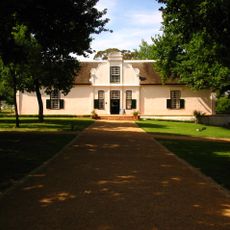
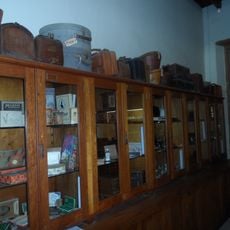
The Latin motto Post Tenebras Lux, "After darkness, light", appears on the colonnade linking the wine cellars; it was a Reformation slogan first inscribed on the Reformation Wall in Geneva. The museum beside the monument keeps the settlers' wine-making tools, clothing, writings, portraits and genealogies. The fleur-de-lis on the woman's robe was long the emblem of the French monarchy.
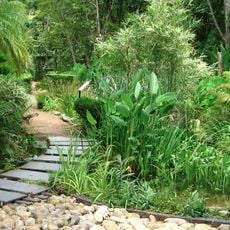
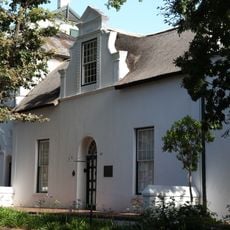
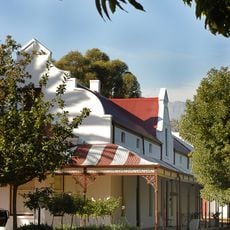
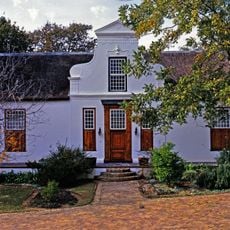
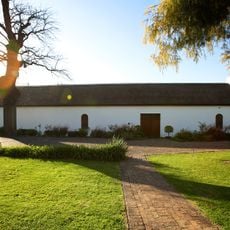
The site is easy to navigate on foot with clear paths around the central monument and good signage throughout. The adjacent museum building provides shelter and additional information, especially helpful during hot weather.
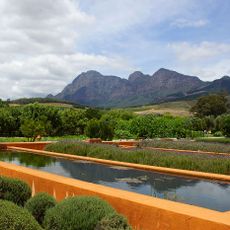
The circular pond in front of the monument reflects the colonnade behind it; the sources describe it as expressing the peace of mind the Huguenot refugees reached in South Africa after persecution in France. The colonnade carries the Latin motto Post Tenebras Lux, first inscribed on the Reformation Wall in Geneva.
The community of curious travelers
AroundUs brings together thousands of curated places, local tips, and hidden gems, enriched daily by 92,856 contributors worldwide.