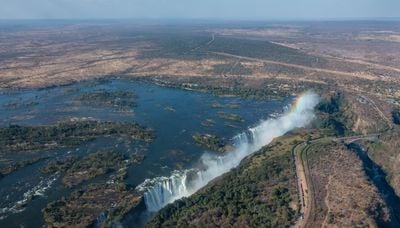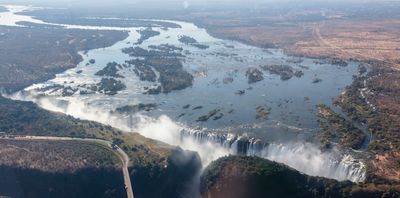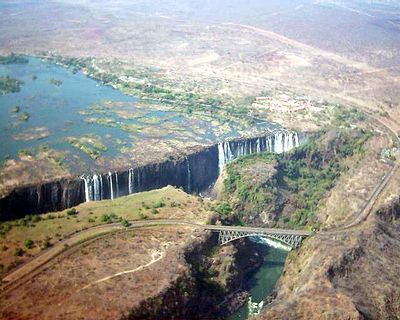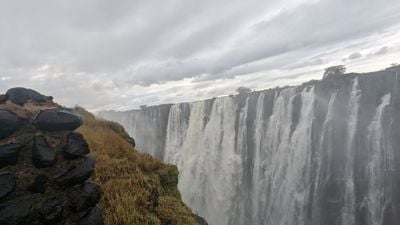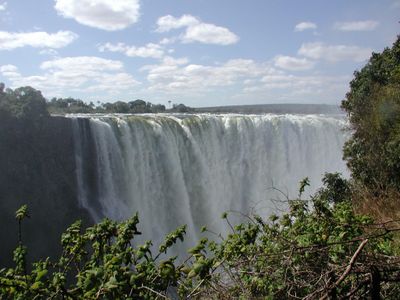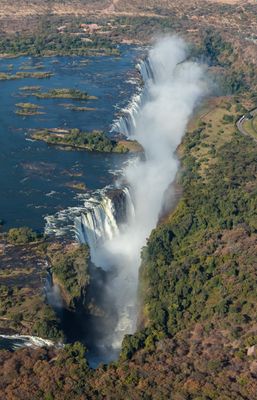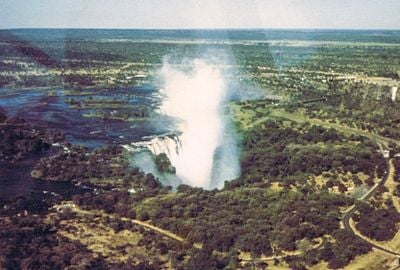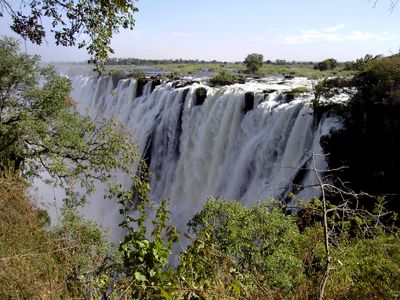
Victoria Falls, Horseshoe waterfall in Livingstone, Zambia and Zimbabwe.
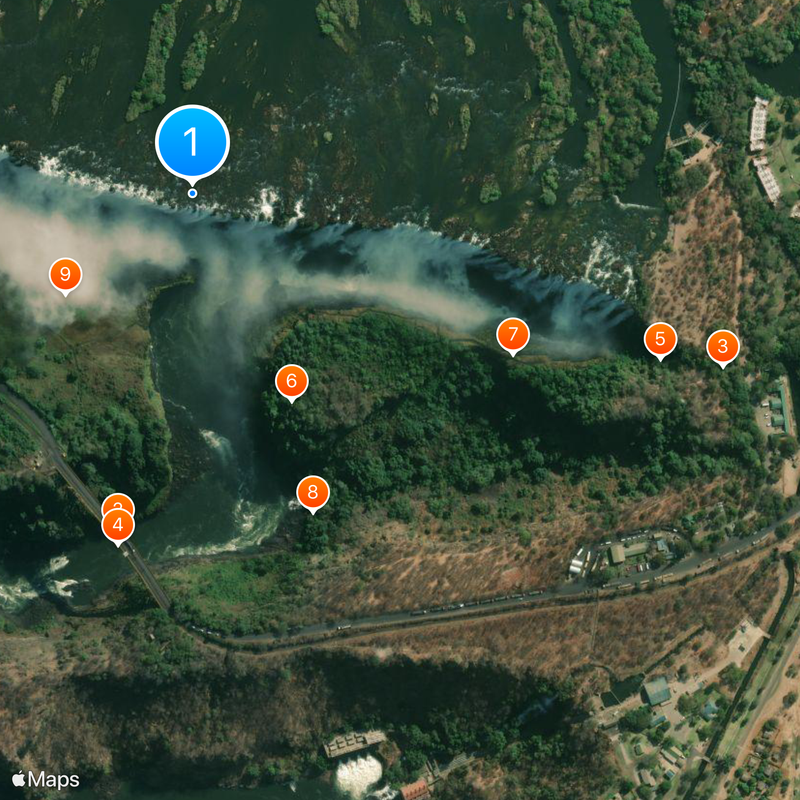
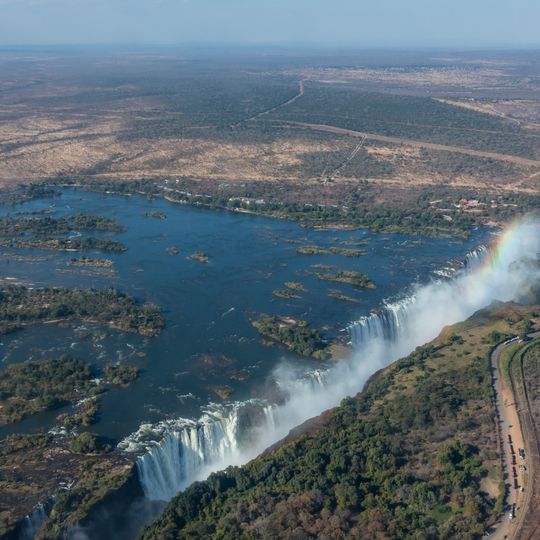
Victoria Falls is a horseshoe waterfall on the Zambezi River between Zambia and Zimbabwe, where the river drops 108 meters (354 feet) into a narrow chasm. The curtain of water extends 1,707 meters (5,600 feet) across and flows into several basalt gorges below, while spray creates a permanent mist that rises especially high during peak flow months.
David Livingstone arrived in 1855 as the first European at the site and named it after Queen Victoria, though indigenous groups had known it for centuries. The area received protected status during the 20th century, with both countries establishing national parks, and UNESCO granted World Heritage status in 1989.
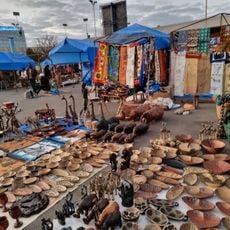
People along the Zambezi call the site Mosi-oa-Tunya, a name still in use today that reflects centuries of connection to the place. Visitors experience the waterfall from two countries, each side offering its own viewpoints and local communities working in tourism, selling crafts and guiding travelers through the area.
Visiting between May and September offers moderate water levels and clear visibility for the best experience. Access is through Livingstone in Zambia or Victoria Falls in Zimbabwe, both served by international airports, and rain jackets help since spray can be heavy even during dry months.
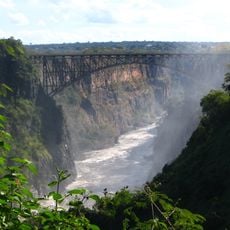
The gorge system runs 80 kilometers (50 miles) downstream, with the Zambezi flowing through eight successive canyons formed by geological fault lines in the basalt. Formation began roughly two million years ago when tectonic activity created weaknesses in the rock that water gradually eroded, causing the falls to migrate upstream over time.
The community of curious travelers
AroundUs brings together thousands of curated places, local tips, and hidden gems, enriched daily by 60,000 contributors worldwide.